Prepare for Winter Hiking in Maine: What to Wear, Pack & Things to Know Before You Go
Want to make sure you have everything you need for your next Winter hike?! Use our Winter hiking checklist and you’ll be good to go! Planning ahead and packing these essentials will help keep you safe and comfortable and make for a positive outdoor experience.
*Some of the links shared in this post may be affiliate links meaning I make a small commission off of your purchase with no extra cost to you. This allows me to continue to create free content for my readers. Thank you for your continued support!
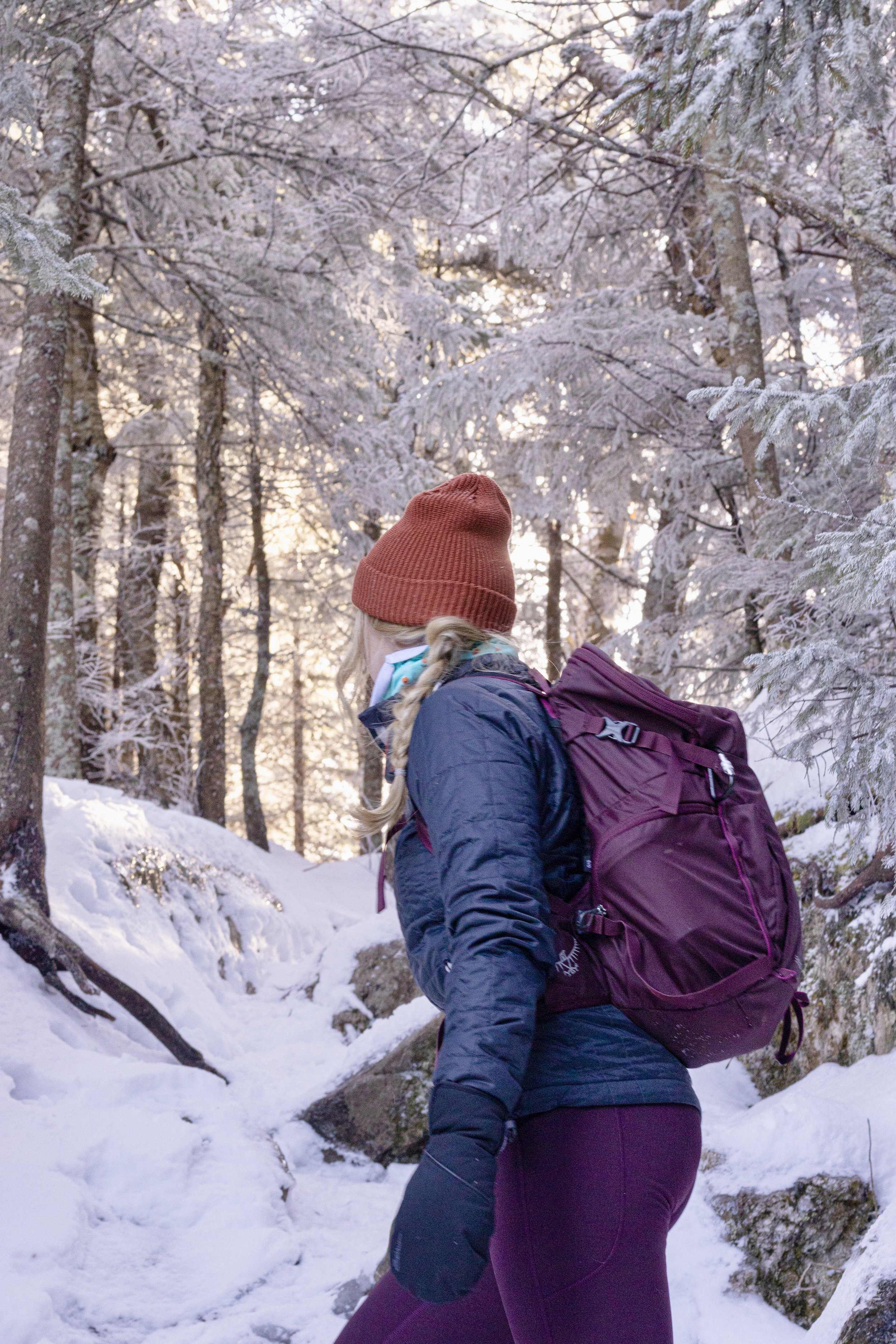
What to expect on a Winter hike in Maine
When hiking in Maine, you can expect a range of conditions depending on the elevation of the hike.
Terrain
Regardless of elevation, you will most likely encounter slippery ice, deep snow, ice or snow-covered rocks, some packed trails, and high winds.
Temperatures
Winter temperatures in Maine can range from 0-degrees Fahrenheit to 40-degrees Fahrenheit. This can directly impact trail conditions, as snow and ice may soften during the sunny or warm parts of the day and then re-freeze at night and in the morning.
Daylight
Daylight is limited during the Winter months in Maine. For example, the sun sets as early as 4:00p.m. in December—so be sure to know when the sun is setting and decide on a safe turn around time.
Water crossings
Maine is full of rivers, streams, brooks, etc. It is likely that you may have to cross a frozen body of water during your hike. Use common sense and gear made for walking on ice, such as microspikes.
What to wear on a Winter hike in Maine
The key to maintaining a comfortable temperature (not too hot and not too cold) during a hike is dressing in layers. For most easy to moderate hikes throughout Maine, three layers is plenty to keep you warm. Most hikers use a three-layer system that involves a base layer, mid layer, and an outer layer. To learn more about how to layer effectively for a Winter hike, read our full detailed blog post.
What to pack for a Winter hike in Maine
Spare change of clothes
First things first, you should always should pack a spare change of clothes. Maine weather can change on a dime, so it’s crucial to have an extra shirt, hiking pants, underwear, socks, etc. There’s nothing worse than getting wet and not having any clothes to change into. Wet clothes and gear can also lead to life-threatening conditions, such as hypothermia.
Hats and mittens
For Winter hiking, I like to start “cold” by wearing thin gloves and a lightly lined hat and packing a warmer, wool-blend hat and pair of warm, waterproof mittens to put on once I reach the summit.
Microspikes
This is arguably one of the most important pieces of Winter hiking gear. They provide amazing traction and help prevent slipping and sliding on ice and loose snow. I’ve tried a few brands and the Kahtoola microspikes are by far my favorite.
First aid kit
Speaking of first aid kits, this is another must-have item, because injuries are never predictable or fun. Having a first aid kit handy could save your life, especially since emergency personnel may take a while to reach you. Make sure your first aid kit is fully stocked with emergency blankets, multi-sized bandages, pain relievers, disinfectant, etc.
Navigation tools (paper map and compass)
These two go hand in hand for a reason. You should always look over the trail you’ll be hiking prior to actually hiking it, so you know what to expect in terms of length and difficulty. If you hike often, you may want to invest in some kind of satellite communication system, like this Garmin inReach. It allows you to send messages and SOS signals if something were to happen to you while hiking. It comes with me on every outdoor adventure. It’s also a good idea to bring a portable power bank with you to charge your phone, as cold weather tends to quickly drain phone batteries.
Food and extra food
Hiking can easily turn into an all-day outing. Think of all the calories you eat normally, then add on the calories you burn while hiking. That is how much food you should be bringing with you. Pack foods with high calories and a lot of protein, such as: nuts, protein and granola bars, and candy. If possible, also store your food in a dry sack to prevent it from getting wet.
Water, water, and more water
Water is important. You can never depend on having access to a reliable water source. A good rule of thumb is to always bring at least 2 quarts of water per person while hiking. In the Winter, water can freeze quickly while hiking in below freezing weather, so either try and use an insulated water bottle or keep your water close to your body.
Flashlight or headlamp
Sometimes, hikes don’t go as planned. One of the most common (and most dangerous) situations is people hiking past their turnaround time because they want to summit. Without a proper flashlight or headlamp, it would be nearly impossible to find your way back down the mountain. My current headlamp is from Black Diamond.
Weather appropriate Clothing
In the winter, high quality merino wool base layers and wool socks combined with a nice insulating layer like this fleece paired with a water-proof and wind-resistant jacket like this. Wearing insulated hiking boots with good traction will also make a big difference.
Pocket knife
Last but not least, a pocket knife is extremely versatile and can come in handy in a number of situations. I never hike without one!
Tips for Winter hiking in Maine
I’ll wrap things up with a few hiking tips:
Start hiking “cold” which essentially means wearing only one or two of your “layers” and using the movement of hiking to warm you up. This usually helps prevent overheating and will generally make your experience more comfortable.
If you do wear too many clothes, start taking them off and stow them in your pack before you start sweating excessively to prevent hypothermia.
If you do end up overheating at some point, bring extra clothes to change into before summiting to help prevent hypothermia.
Stow extra layers (puffy jacket, mittens, a hat, etc.) in your pack and put them on before summiting to keep warm.
Leave no trace
When it comes to enjoying time outdoors, remember the golden rule: Leave No Trace. It’s as simple as picking up after yourself, staying on the trails, and leaving nature just as beautiful as you found it. Think of it like being a good guest—keep things clean, respect the wildlife, take only memories and leave behind only footprints. By practicing Leave No Trace, you help preserve the magic of Maine for future adventurers to enjoy, so everyone can keep enjoying the same beautiful, wild world we love.
Want more Maine travel inspiration? Follow MyMaine on Instagram!
Explore our hikes + trails page to find your next Winter hike!
If you love spending time outdoors in Maine, be sure to scroll down to the bottom of the page (or click here) and subscribe to my e-mail list! By doing so, you’ll be the first to receive all of my latest and greatest outdoors-y Maine content straight to your inbox! And I solemnly swear that I won’t sell your e-mail to spammers or scammers living in their parent’s basement.
With love,
MyMaine