What to Wear Winter Hiking in Maine: Essential Gear and Layering Tips to Stay Warm
Winter hiking in Maine is no joke—you’ll encounter deep snow, thick ice, bone-chilling winds, frozen stream crossings, and snow much more (see what I did there?). The snow-covered trees and crisp mountain air may be inviting, but the Winter elements can quickly turn a dreamy hike into a nightmare if you aren’t dressed properly. Luckily—you’ve ended up on MyMaine, a blog run by a local Mainer that loves helping adventure seekers like yourself prepare for outdoors activities in Maine, such as Winter hiking.
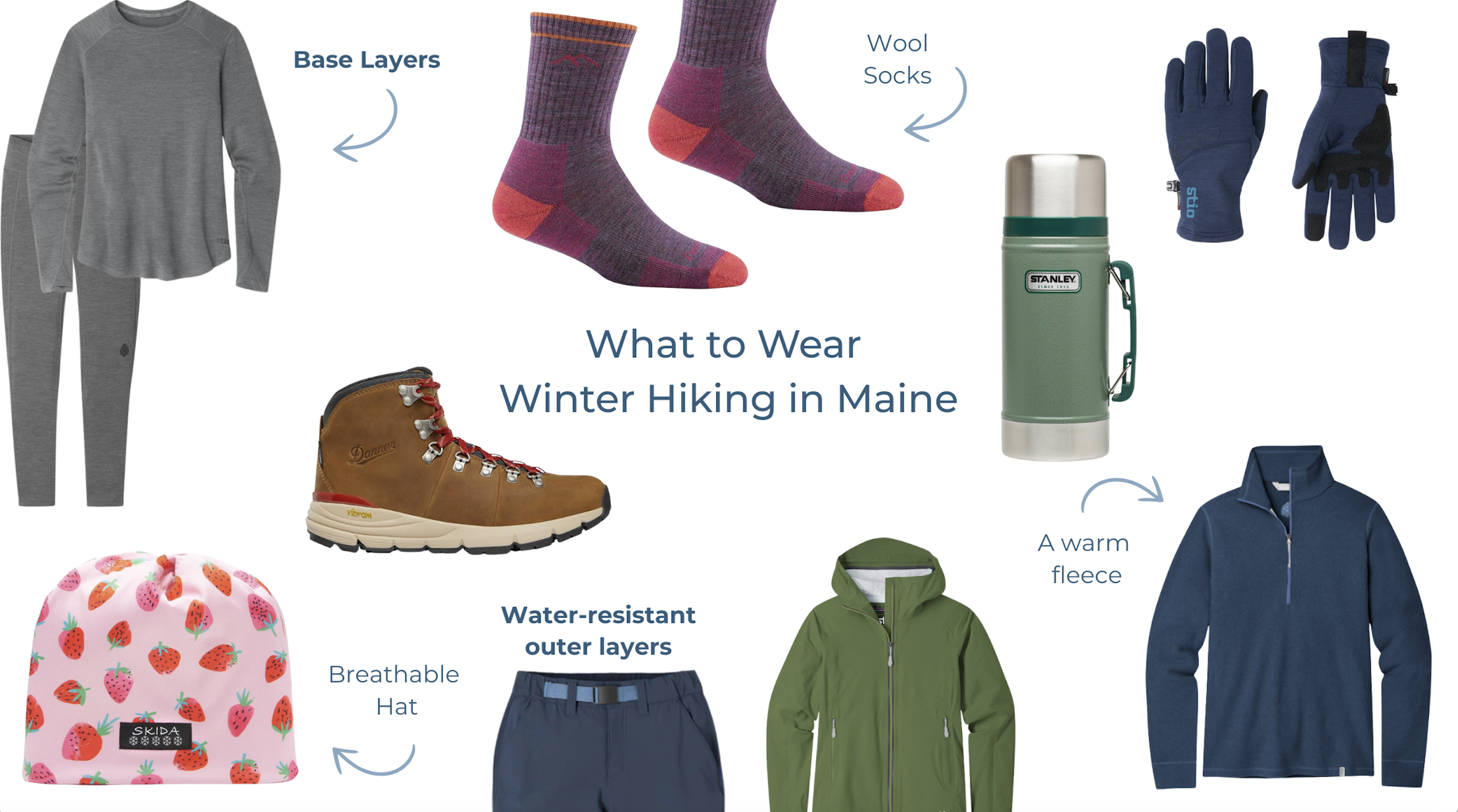
This guide breaks down everything you need to wear on winter hikes in Maine so you can enjoy the trails confidently and comfortably. Be sure to also check out my Winter Hiking Essentials storefront on Amazon—it has all of my go-to Winter hiking gear in one place for easy, breezy shopping.
*Some of the links shared in this post may be affiliate links meaning I make a small commission off of your purchase with no extra cost to you. This allows me to continue to create free content for my readers. Thank you for your continued support!
What to wear on a Winter hike in Maine
The key to maintaining a comfortable temperature (not too hot and not too cold) during a hike is dressing in layers. For most easy to moderate hikes throughout Maine, three layers is plenty to keep you warm. Most hikers use a three-layer system that involves a base layer, mid layer, and an outer layer. I’ll provide more details about each of these layers below.
What is a base layer?
A base layer is the first layer of clothing that sits on top of your skin. The purpose of a base layer is to get rid of any moisture that might be coming off your body while hiking to keep you dry and warm. If you don’t get rid of this moisture, it will make your clothes more and more wet, which will make you cold and may put you at risk for developing hypothermia.
What materials make “good” base layers?
Merino wool is by far the best material for base layers. It’s a bit more expensive than synthetic or fleece base layers, but once you use it you’ll feel the difference. Wool works overtime to retain heat, wick moisture, and stay dry all day long. A merino wool-blend or polyester-blend base layers will also perform well. Avoid cotton at all costs—there is a reason people say cotton is rotten.
Which base layer weight do I need for Winter hikes?
Base layers come in three weights—light, mid, and heavy.
Heavy base layers are great for extremely cold temperatures and low-intensity Winter activities, like ice fishing, flat trail walks, or watching an outdoor sport like skiing or hockey.
Mid weight base layers are great for moderate temperatures (anything over 20-degrees) or when you are doing moderate-intensity Winter activities, like hiking, building a snowman, alpine skiing, etc.
Lightweight base layers are great for temperatures above 40 degrees, or when doing high-intensity Winter activities such as cross-country skiing or trail running.
My favorite base layers for Winter hikes
Don’t fear—there are base layers for every budget. What are the key differences between a $50 base layer and a $150 base layer? A more expensive base layer will have a higher amount of wool and tend to be more durable.
Kari Traa
Their iconic base layer tops and bottoms are adorable—they come in so many colors and styles.
L.L Bean
I’ve used their Cresta mid weight base layer tops and bottoms for three Winters and they’re still going strong.
REI
Their merino 185 and mid weight base layer tops and bottoms are a great value.
Stio
Why are base layers so expensive?
If you’re new to the world of outdoor gear, these price may come as a surprise. But trust me when I say that investing in quality hiking clothing makes a huge difference in your outdoor experience and will save you money in the long run, because it will far outlast the inexpensive clothing that is likely to tear, rip, or break from repeated use. A lot of high-end companies (Patagonia, REI, L.L. Bean) have policies that will allow you to return gear that doesn’t perform well (within a certain time frame).
What is a mid layer?
The mid layer is a layer of clothing in between your base layer and outer layer that helps insulate you, or keep you warm. Most people commonly wear a fleece or a down vest/jacket, or any other piece of clothing made to retain heat. The colder the temperature, the more warmth you will need from this mid layer.
If you’re doing a long or rigorous hike, you may want to stow this layer in your bag and take it out during the last leg of the hike before you reach the summit to provide extra warmth from the wind and cold. Otherwise, you may sweat a lot and get overheated, which can cause hypothermia in cold temperatures.
My favorite mid layers for Winter hikes
Mid layers don’t have to break the bank. Here are some of my favorite go-to mid layers:
REI Trailmade Fleece, this is available in both men and women’s fits.
The women’s and men’s Turpin fleece from Stio is a great mid layer option.
Stio also makes a fantastic Pinion down vest for both men and women that is extremely warm.
What is an outer layer?
The outer layer is the outermost layer of clothing. Ideally, for Winter hiking, it is both water and wind resistant. This layer can be stowed in your pack, if needed, and pulled out when winds, snow, or rain pick up.
My favorite outer layers for Winter hikes
Outer layer tops
My go-to is the Ender jacket from Stio. It is a hooded waterproof, wind-resistant jacket that is also breathable. Click here for the men’s version and click here to view the women’s version.
The REI Trailmade jacket, that comes in both women’s and men’s fits is also a great choice.
Outer layer bottoms
It’s hard to beat Stio’s men and women’s Pinedale pant. They repel water and are extremely durable.
REI’s Trailmade hiking men and women’s pants are a great budget-friendly hiking pant option. They also repel water and are fast drying.
What to wear on your head, feet and hands
On my head, if it’s really cold, I’ll wear a fleece-lined Skida skida alpine hat, which provides both warmth and breathability. If it’s moderately cold, I’ll choose a Skida fleece-lined headband instead.
On my feet, I’m always wearing darn tough wool mid weight or heavy weight socks paired with a winter hiking boot. If there is a lot of ice, snow, and/or slush on the trail, I’ll wear these Kahtoola microspikes. If there is only packed snow and the trail is relatively flat, I’ll wear snowshoes.
On my hands, I’ll start the hike with thin gloves and pack a pair of warm mittens to put on when I get cold or when I reach the summit.
Winter hiking tips
I’ll wrap things up with a few hiking tips:
Start hiking “cold” which essentially means wearing only one or two of your “layers” and using the movement of hiking to warm you up. This usually helps prevent overheating and will generally make your experience more comfortable.
If you do wear too many clothes, start taking them off and stow them in your pack before you start sweating excessively to prevent hypothermia.
If you do end up overheating at some point, bring extra clothes to change into before summiting to help prevent hypothermia.
Stow extra layers (puffy jacket, mittens, a hat, etc.) in your pack and put them on before summiting to keep warm.
Leave no Trace
When it comes to enjoying time outdoors, remember the golden rule: Leave No Trace. It’s as simple as picking up after yourself, staying on the trails, and leaving nature just as beautiful as you found it. Think of it like being a good guest—keep things clean, respect the wildlife, take only memories and leave behind only footprints. By practicing Leave No Trace, you help preserve the magic of Maine for future adventurers to enjoy, so everyone can keep enjoying the same beautiful, wild world we love.
Want more Maine travel inspiration? Follow MyMaine on Instagram!
Ready to plan your next Maine Winter adventure? Check out our detailed guides and itineraries!
If you love spending time outdoors in Maine, be sure to scroll down to the bottom of the page (or click here) and subscribe to my e-mail list! By doing so, you’ll be the first to receive all of my latest and greatest outdoors-y Maine content straight to your inbox! And I solemnly swear that I won’t sell your e-mail to spammers or scammers living in their parent’s basement.
With love,
My Maine