A Complete Guide to Backpacking in Baxter State Park: Packing List, Insider Tips, and More
Backpacking in Baxter State Park is one of those adventures you won’t forget—but it’s also one you really want to be prepared for. The rugged terrain, always changing park rules, and unpredictable Maine weather make planning ahead absolutely essential. In this post, we’ll walk through everything you need to know before your trip to Baxter State Park—reservations, what to pack, park rules, what to expect for terrain, and insider tips—so you can head into the park feeling ready, confident, and excited for whatever the wilderness throws your way.
Disclaimer: This article was created using information from my personal experience hiking in Baxter State Park. I am not a professional guide and this guide is not professional advice. As always, use common sense and best judgement when planning for a trip in the North Maine Woods.
*Some of the links shared in this post may be affiliate links meaning I make a small commission off of your purchase with no extra cost to you. This allows me to continue to create free content for my readers. Thank you for your continued support!
About Baxter State Park
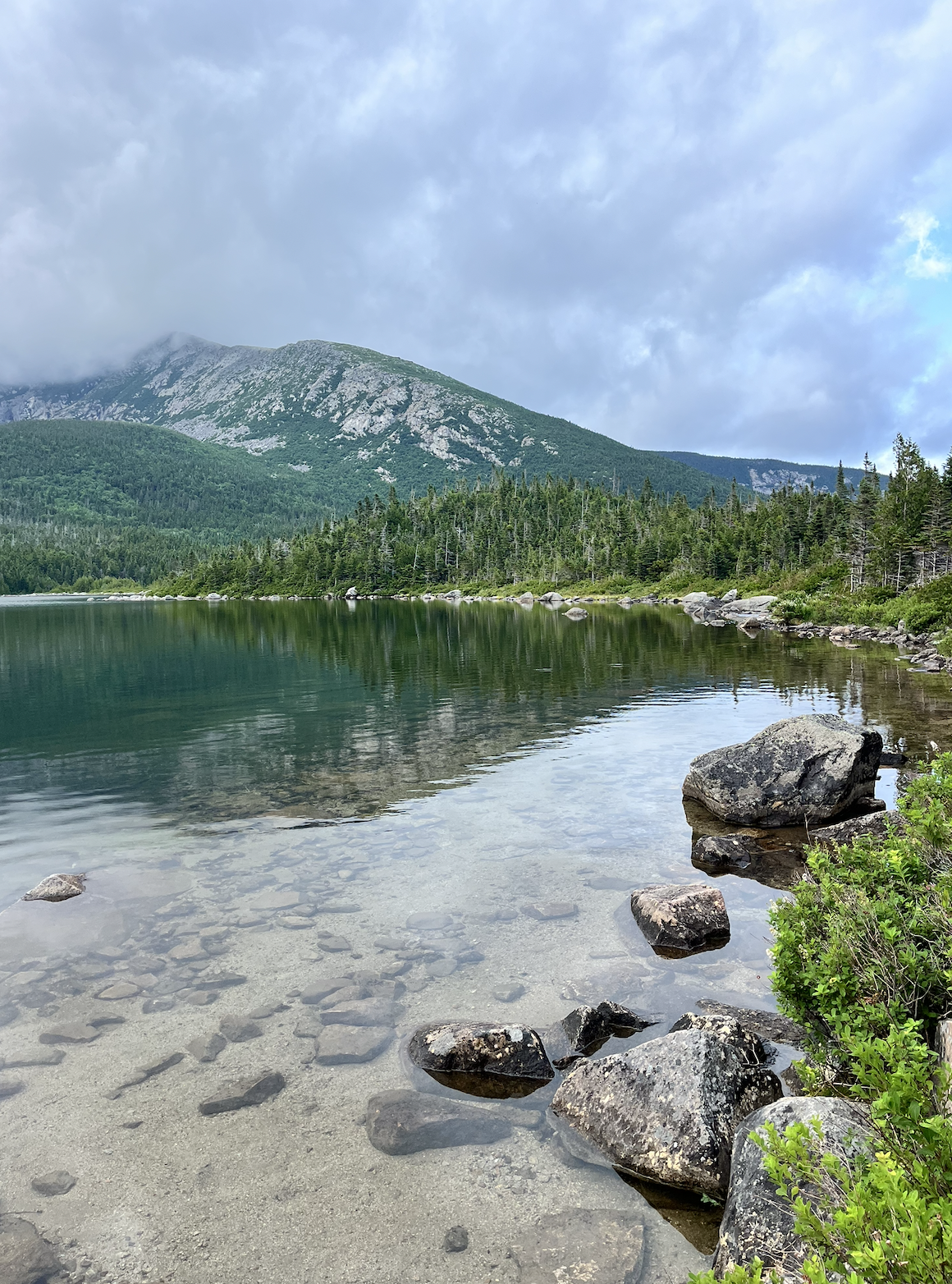
Baxter State Park caters to adventurers from all over the world, most of which are hoping to summit Katahdin, the final peak on the Appalachian Trail, standing 5267’ tall. In addition to it’s 337 campsites and 215 miles of trails, the park has over 209,000 acres of forest, lakes, ponds, streams, and rivers, all surrounded by rugged mountains. Baxter State Park is known for its commitment to conservation, maintaining a "forever wild" status with minimal development to preserve its natural beauty and diverse wildlife.
Things to know before visiting Baxter State Park
All the roads in the park are dirt and/or gravel, so be sure your vehicle is in good shape before visiting
There is no cell service in Baxter State park, so either bring a satellite communication device or be prepared to go without
There are no stores or gas stations in the park—most campgrounds that allow fires do sell campfire wood
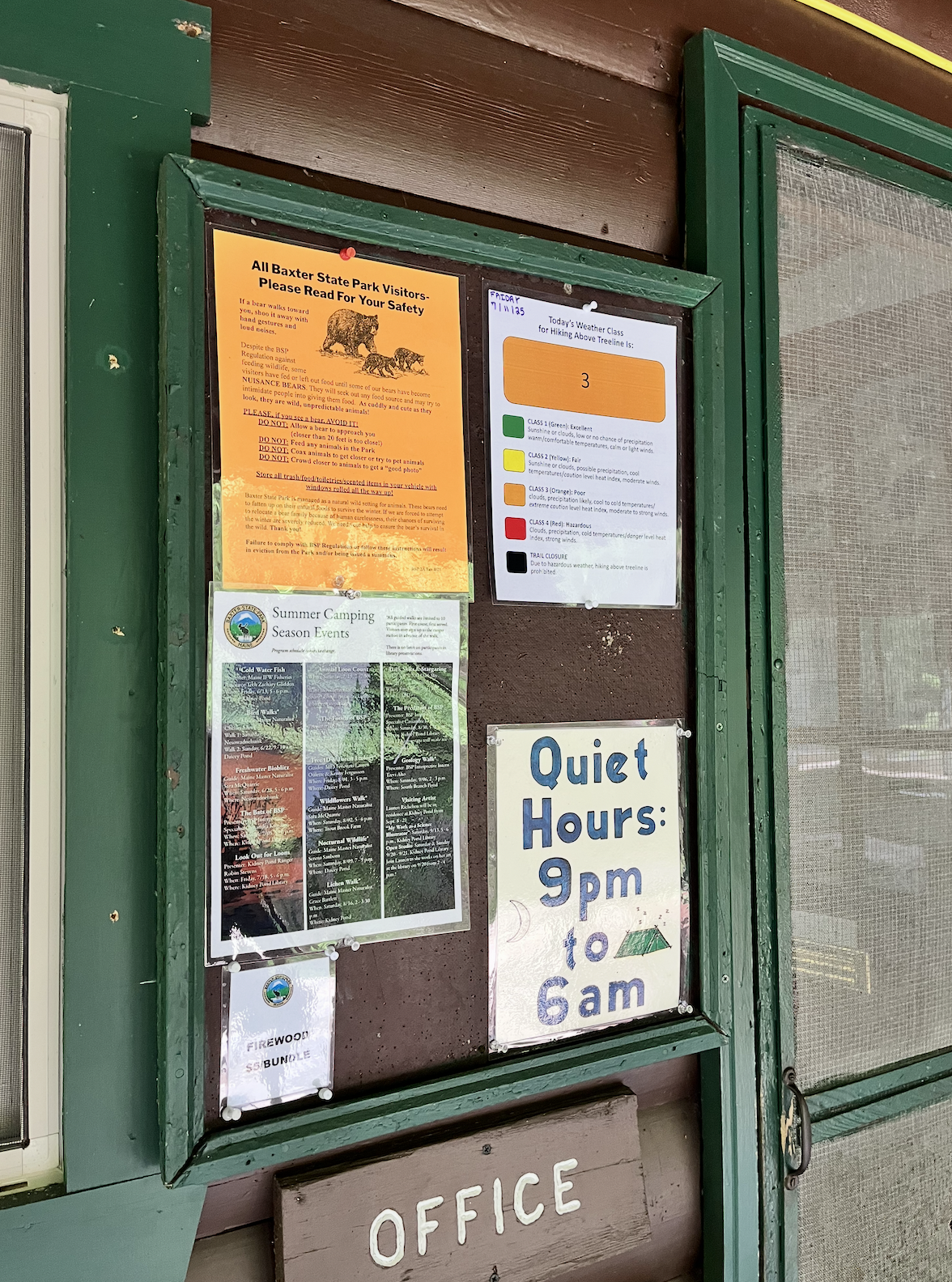
Animals will try and steal or eat your food—be sure to keep a close eye on it
Camping and hiking reservations need to be made in advance
No pets are allowed in the park
You must carry out everything you carried into the park (trash, food scraps, bottles, etc.)
There is no running water or flush toilets in the park
Planning your trip to Baxter State Park
It’s important to plan your trip to Baxter State Park weeks or even months in advance. This is largely due to the popularity of the park and the fact that reservations are required for camping, cabins, and hiking any trail on Katahdin. Planning ahead of time is also important because there is no service in the park, so you’ll want to provide an itinerary to a family member or friend in case of emergencies.
The first step in planning your trip should be reviewing park and campground maps so you can decide where you would like to visit, when, and for how long. Be sure to come up with some a back-up plan or two in case your first choices aren’t available. Be sure to read all of our detailed blog posts about hiking and camping in Baxter State Park. If your plans involve either camping in the park or hiking Katahdin, be sure to read the next section about making reservations for Baxter State Park.
Baxter State Park reservations
Hiking reservations
All Katahdin trailheads require a Katahdin Trailhead Pass (KTP) if you’re not camping inside the park the night before you hike. The Katahdin Trailheads are Roaring Brook, Abol, and Katahdin Stream. Even if you are not hiking any of the trails that go to Katahdin, you will still need a Katahdin Trailhead Pass because you are parking at a Katahdin Trailhead. All other trailheads in the park (Traveler Loop, Doubletop, The Brothers, etc.) do not require a parking pass.
The gate to the park opens at 6:00a.m. and hiking reservations are held until 7:00a.m. Yes, you read that right. 7:00a.m. At 7:05a.m., the rangers will start “re-assigning” Katahdin Trailhead Reservation parking spots to people waiting at the gate. Therefore, it is possible to not make a reservation and try to score a parking spot from someone that didn’t show up— but you may not get a parking spot at the trailhead you wanted to hike from.
Camping reservations
All Baxter State Park campgrounds, including the backcountry campsites, require reservations to be made in advance.
When to make a reservation
Hiking reservations
Starting on April 1st, you can reserve Katahdin Trailhead Passes in advance for any day of the summer. There is a limit of two reservations per calendar month for the months of June-October. Katahdin Trailhead Passes are not required in May.
Camping reservations
Camping reservations can be made up to four months in advance. This table can help you pinpoint the exact date you should call to make a reservation. Camping reservations open for the season starting in January.
How to make a reservation
If you are planning a trip during the Summer and Fall (June-October), camping and hiking reservations can be made either via phone (207-723-5140), in person at the Baxter State Park headquarters in Millinocket, via mail, or online using the Baxter State Park website. The reservation office is open seven days a week in the Summer, from 8:00a.m. to 4:00p.m. Reservations for the month of May, Chimney Pond, Russell Pond, backcountry sites, bunkhouses, and group sites, must be done via phone, mail, or in-person.
In my experience, I have found that calling when the office opens at 8:00a.m. to make a reservation is easiest, especially if you need advice on where to go and what to do. Maine residents can make day-hiking reservations for any day of the season starting April 1st. Non-Maine residents can make day-hiking reservations up to two weeks before your hike. You cannot make more than 3 day hiking reservations per month.
Reservation Fees
Katahdin Trailhead Passes are $10.00 per day. If you are not a Maine resident, you will also have to purchase a gate pass, which are $20.00. Or you can buy a season pass for $50.00. Click here for the most up-to-date information on camping fees.
What to pack for backpacking in Baxter State Park
Food
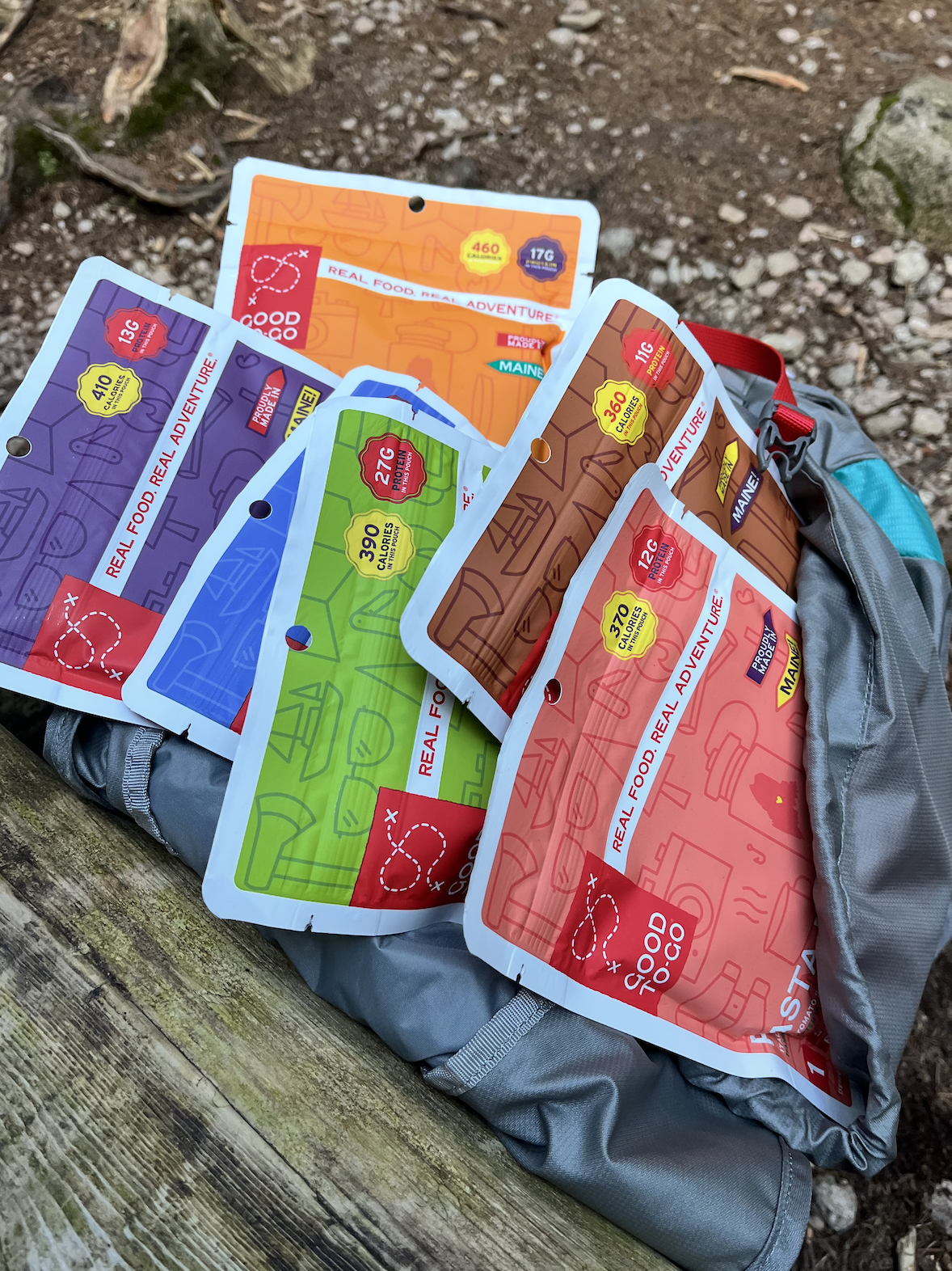
While backpacking, you’ll want to bring food that is lightweight, calorie-dense, weather-proof, and easy to prepare—especially since campfires are not allowed at many backcountry sites. For breakfast and lunch, I usually go for no-cook options like protein bars or uncrustables. Then, I’ll have a nice and hot freeze-dried meal for dinner. This helps me conserve the amount of water I need to carry as well as the amount of time I need to stop for while hiking. You can’t go wrong with either Mountain House or Good To Go meals (I love supporting this Maine company!).
We boil water for our meals using the Jetboil Stash cooking system. It’s super light and compact, making it perfect for our backpacking trips. Fuel canisters have to be purchased separately from the system, but it’s well worth the money—it boils water in just 2.5 minutes!
When backpacking in Maine, another essential item is a dry bag. We have black bears and feral squirrels in Maine—especially in Baxter State Park, so it is required to store your food in a dry bag at night and hang it on the “bear bag” line. Be sure to also pack a gallon-size baggie or dry bag for packing out your food scraps and trash.
Water and water filtration
When planning your backpacking trip, it is crucial to talk with park staff about water sources that may or may not be available. A good rule of thumb is to have 2-4 liters of water per person per day that you will be hiking. If you’ll have access to water sources during your hike, then you don’t have to worry about carrying all that water with you every day. Keep in mind that any water you get from water sources will need to be filtered.
It’s smart to bring two methods of water filtration. I like iodine tablets (which take about 30 minutes to sterilize your water) or a Sawyer Squeeze water filtration system, which requires filling up a large pouch with water and then squeeze it through a filter into a clean bottle or bladder. Or you can screw the filter onto a disposable water bottle and not spend the time squeezing the water into a bottle (which can be very time consuming). Personally, using iodine tablets is my preferred method of water filtration. I find it to be easier and less time consuming. A third option is to boil any water you plan on drinking—which is extremely time consuming.
Hiking gear
Besides food and water filtration, the next most important factor is hiking gear. I’ve found that this largely varies from person to person, so i’m just going to share what I use and leave it at that.
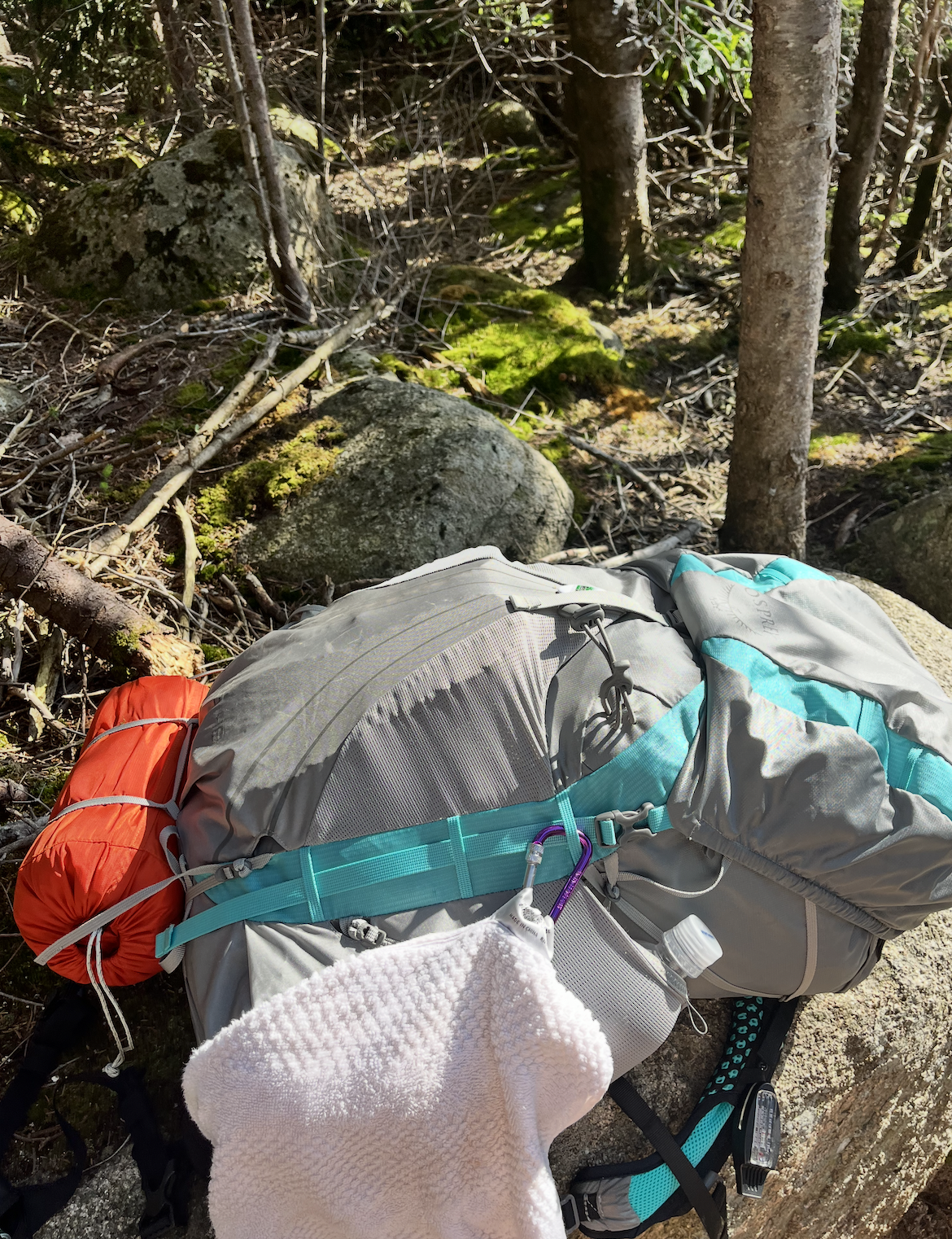
First and foremost, overnight hiking packs. These vary in size, typically holding between 30-60 liters. My go-to backpacking pack is an Osprey 50-Liter Renn pack, but I would highly recommend any Osprey pack. I’ve also heard a lot of positive feedback about HyperLite Mountain Gear packs.
Don’t forget to pack hiking poles. They are the true MVP of any backpacking trip. They help you stand upright and breathe better. If used correctly, they help relieve pressure and pain on your knees.
For hiking boots, you can’t get any better than Salomon. I wear the X Ultra Mid Gore-Tex boots and my husband wears the men’s version. In my experience, Salomon boots are lightweight, water resistant, breathable, and have great traction. They pair perfectly with Darn Tough merino wool socks.
For sleeping, we usually pack a two-person ultralight tent, an inflatable pillow, an insulated sleeping pad, and a lightweight down sleeping bag.
Clothing
Everyone’s has a different preference when it comes to hiking clothes—so I’m just going to share some general advice and links to my most-used items of hiking clothing.
Layering is key to regulating your temperature while hiking. Pack lightweight, moisture-wicking shirts and pants, a warm, insulating fleece or down jacket, and a waterproof outer layer—like a rain jacket. If you’re going to be exposed to the sun a lot, consider packing long sleeve sun shirts and a sun hat. A pair of mittens and a warm hat are always good to have. And don’t forget to pack an outfit that you only wear to bed—base layers can be great for this.
Don’t be afraid to bring several changes of clothes—there is nothing better than changing out of a rain-soaked shirt or pair of socks into something dry after a long day of hiking. I usually pack my clean clothes in a dry bag to keep them out of the humidity and rain and bring an extra dry bag for my dirty/wet clothes so they don’t soil my clean clothes.
Toiletries and hygiene products
For my “toilet kit” I usually pack a roll of toilet paper, which I keep in either a dry bag or ziplock baggie along with a lightweight trowel. I also bring a gallon size baggie to pack out my used toilet paper in. Inside that baggie, I will typically put a smaller baggie that has my tampons and pads (if needed) as well as some wilderness wipes and hand sanitizer.
I usually keep my hygiene products to a minimum—deodorant, sunscreen (I love roll-on sunscreen because it’s so compact), wilderness wipes to refresh my face and private parts, a toothbrush, toothpaste, bug spray, and a wide-tooth comb, and some extra hair elastics..
Emergency Supplies
Emergency supplies are arguably the most critical item in your pack. Emergencies can happen to anyone at any time—even when you are prepared.
I always pack a first aid kit that has enough medical and survival supplies for everyone in my hiking group. In addition to the kit, I will also pack quick clot, moleskin for blisters, emergency blankets, a compass, waterproof paper maps of the area I am hiking, a small multi-tool, a headlamp, a power bank and charging cable for my cell phone, identification (my license), and cash. It’s also important to pack items specific to your needs—medications, etc.
Hiking terrain in Baxter State Park
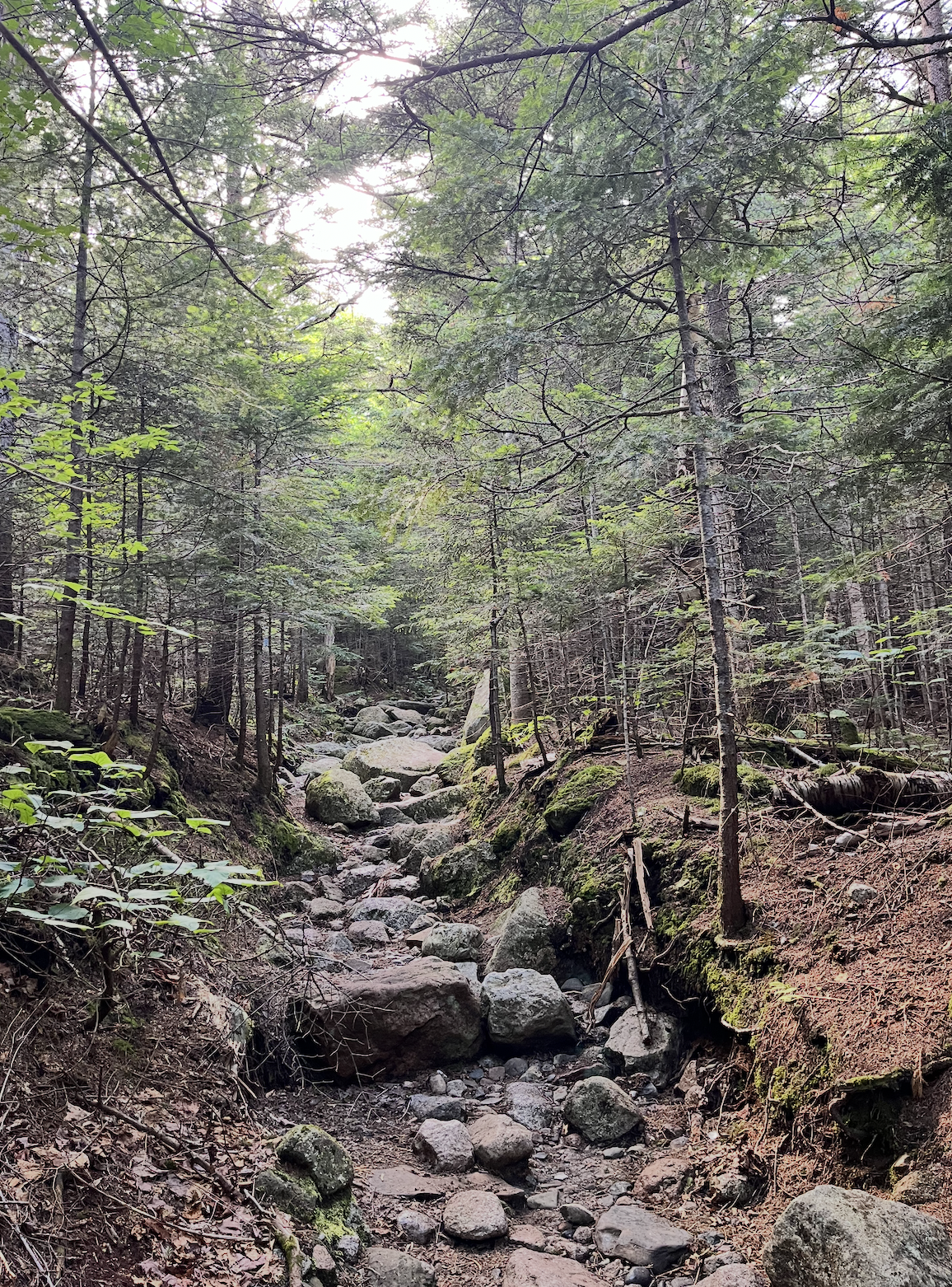
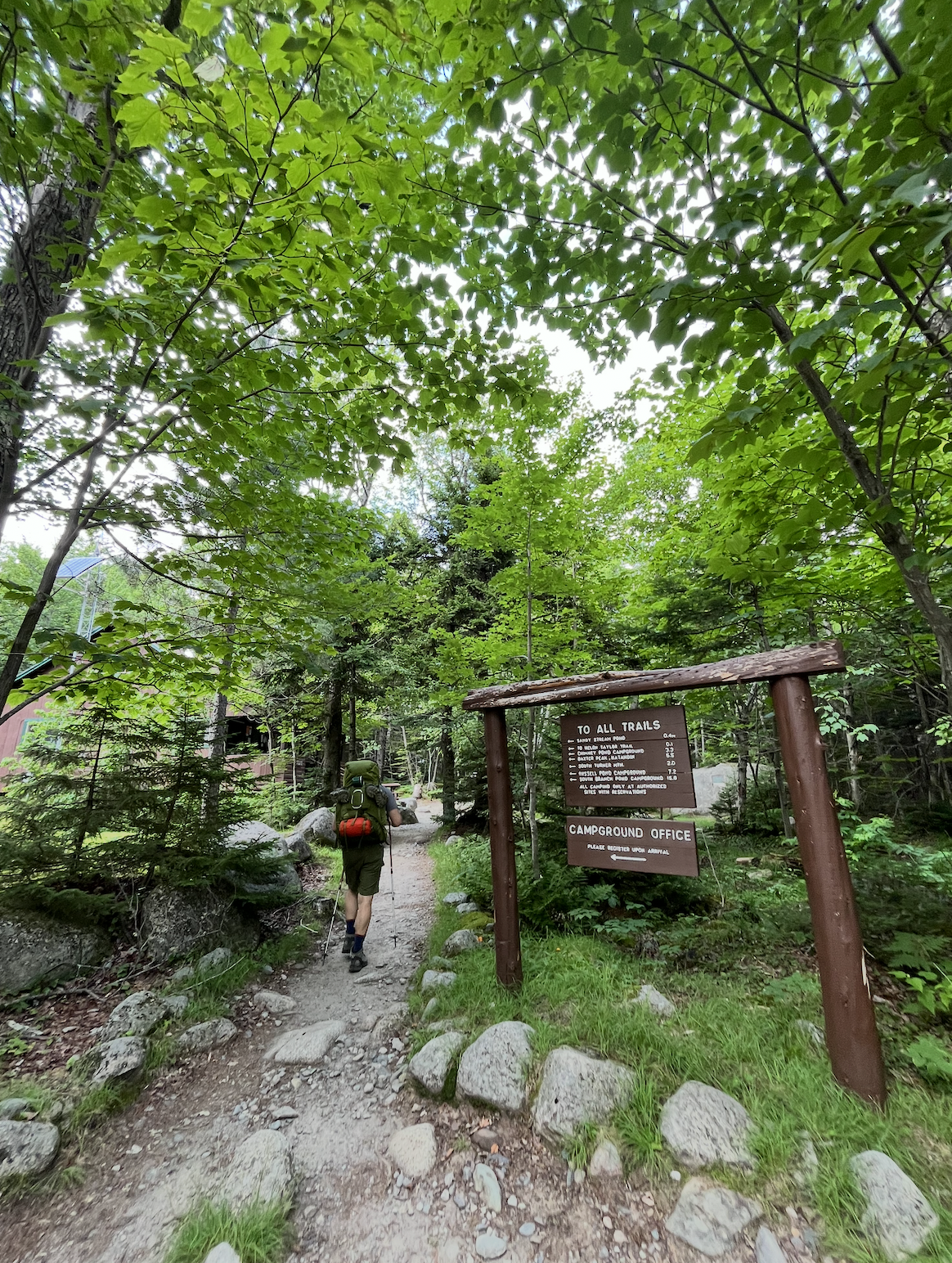
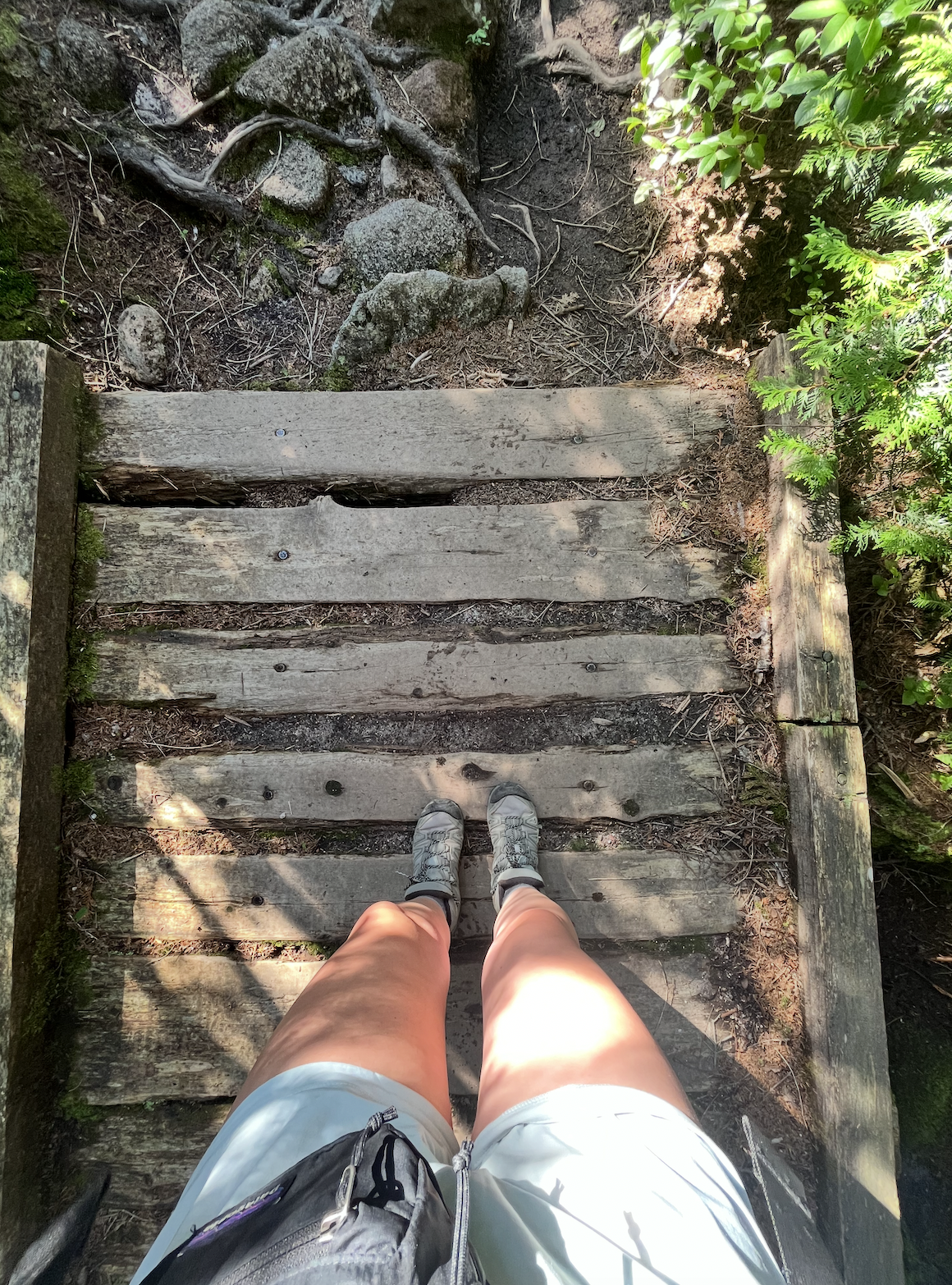
Baxter State Park has 209,644 acres of land and 220 miles of hiking trails—so there are plenty of backpacking options for everyone. Hikers can expect to encounter dense forest, dirt trails, water crossings, rocky trails, rock scrambles, iron rungs, wooden planks and bridges, loose rocks, and so much more.
Mountains in Baxter State Park over 3,000’ feet (Katahdin, Traveler, and The Brothers) are extremely rocky, exposed to the sun and wind, and have multiple climate zones, which makes them dangerous. The mountains lower in elevation tend to be densely forested, very rocky and less trafficked.
Backpacking trail recommendations in Baxter State Park
Daicey Pond/Kidney Pond (difficulty: beginner/intermediate)
The SouthWest region of Baxter State Park is fantastic for beginner and intermediate hikers that want to backpack in the park. There is a large network of trails that wind through multiple ponds, streams, and waterfalls. Most of these bodies of water also have canoes available to rent—which is a fantastic way to see wildlife. Be sure to check out Sentinel Mountain, Blueberry Ledges, and the Niagara Falls. Kidney Pond and Daicey Pond have cabins and bunkhouses, while Katahdin Stream and the Birches offer traditional lean-tos and primitive campsites.
South Branch Pond > Pogy Pond > Russell Pond (difficulty: moderate)
If you’re looking to fully immerse yourself in the serenity of Baxter State Park—this is a great moderate backpacking trail option. Park at South Branch Pond Campground and enjoy a night or two by renting a canoe, exploring the ponds, and checking out nearby sights—South Branch Mountain, Howe Brook Trail, or South Branch Falls. Then, embark towards Pogy Notch trail and stop for a night or two at Pogy Pond to unwind, canoe, and nature watch. Continue hiking along the Pogy Notch Trail to reach Russell Pond—an outdoor adventurers paradise. This remote location connects to several scenic trail networks, ponds, streams, brooks, and waterfalls. Be sure to hike to Grand Falls, explore Six Ponds and Deep Pond via canoe, and hike up to Caverly Lookout.
Chimney Pond (difficulty: challenging)
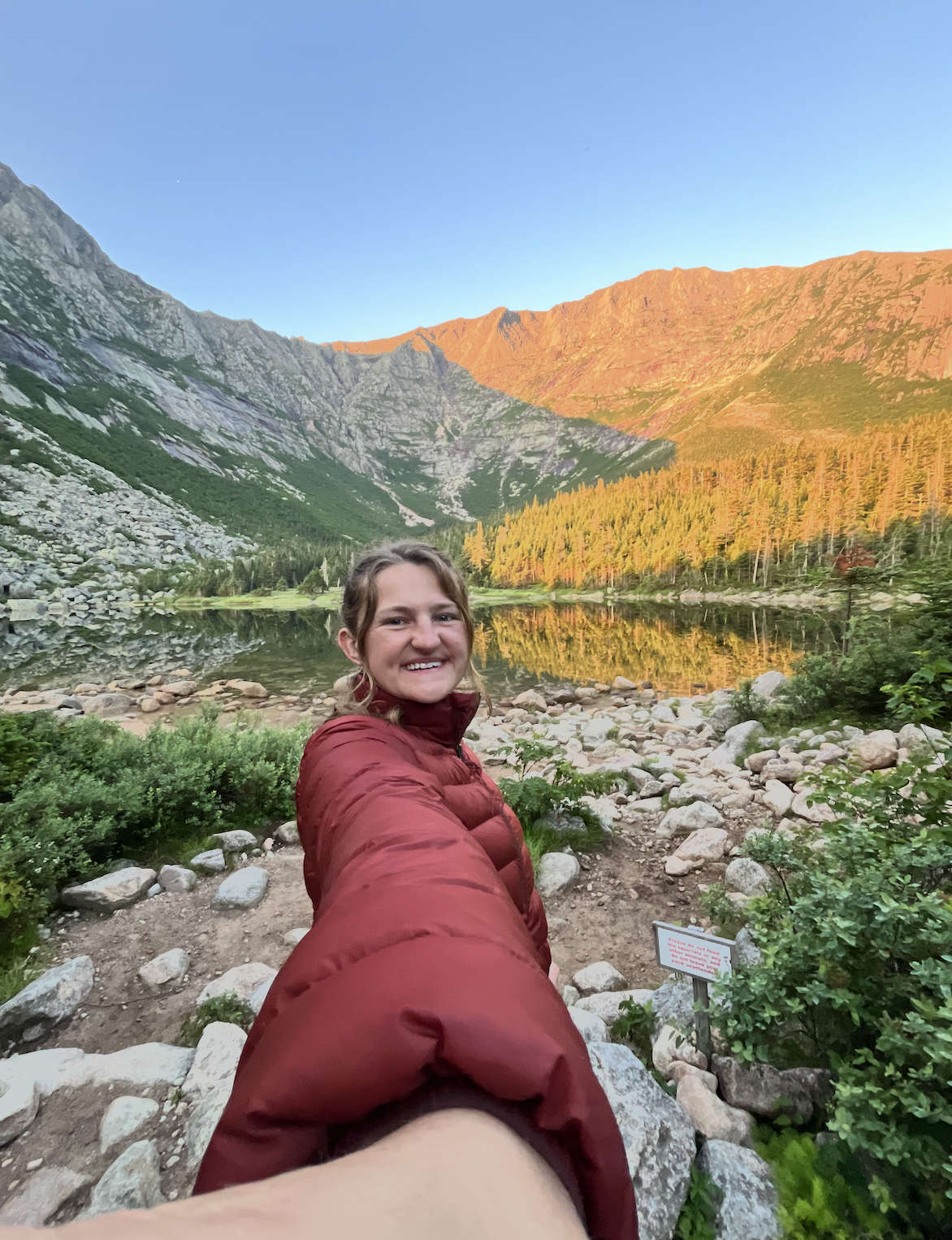
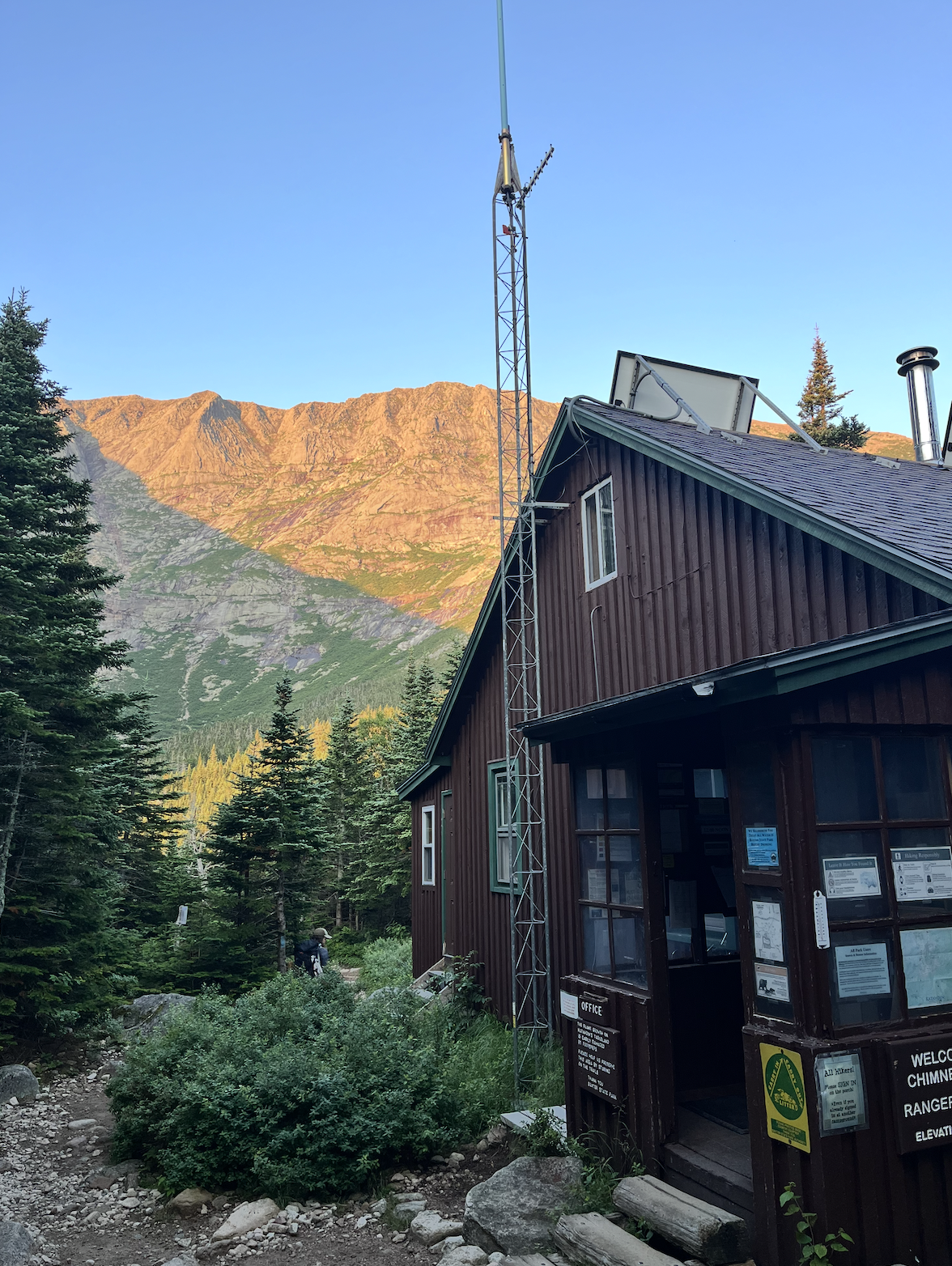
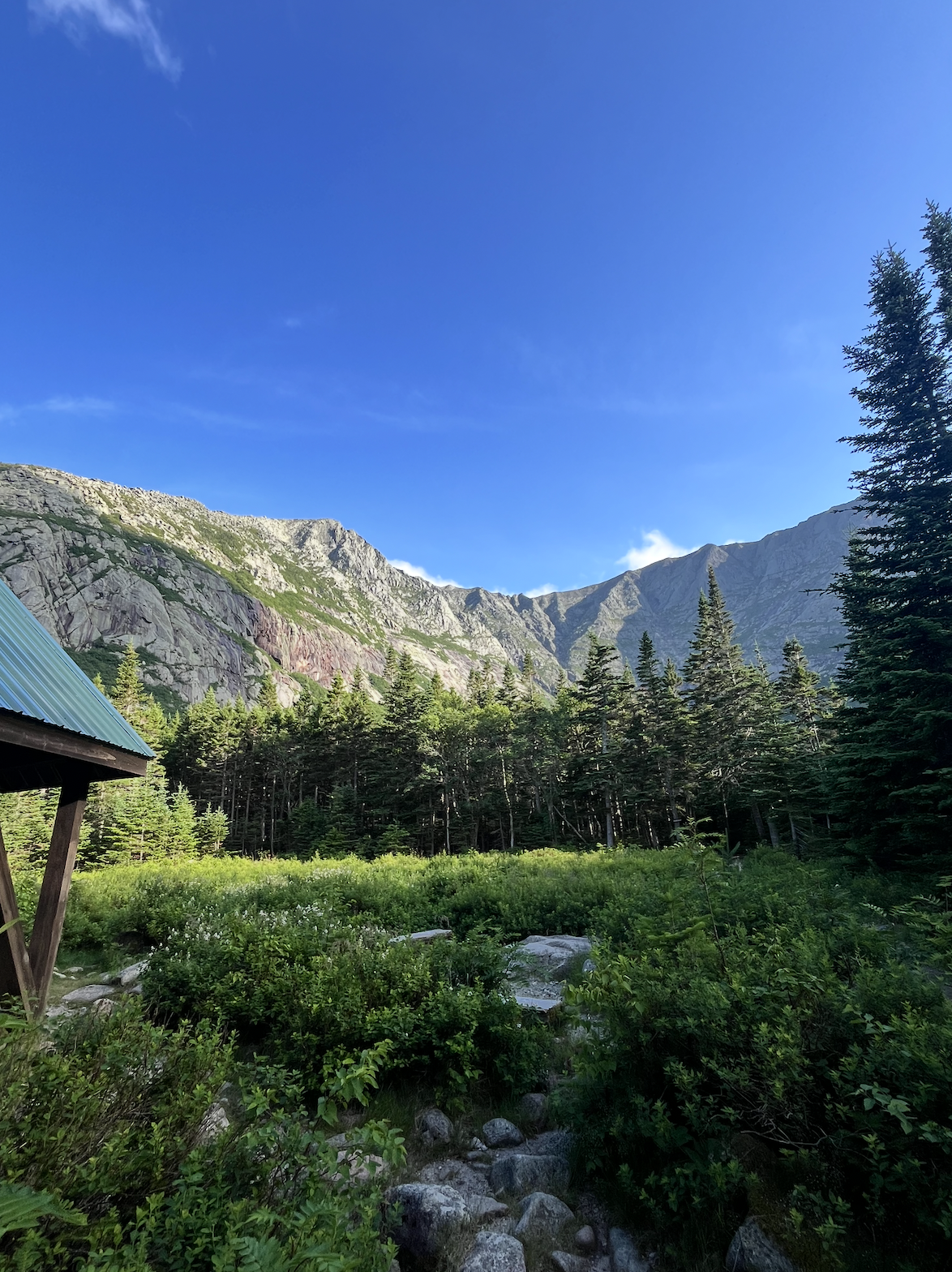
Chimney Pond is a backcountry campground that is known for its iconic views of Katahdin. To reach Chimney Pond, park at Roaring Brook Campground and ascend the rocky Chimney Pond Trail until you arrive at the campground. Chimney Pond Campground has lean-tos and a bunk house. During your stay, explore the rugged trails of Katahdin, hike to the Pamola Caves, or enjoy a slow, relaxing day by the shoreline of Chimney Pond. Click here to learn more about Chimney Pond.
Leave no trace
When it comes to enjoying time outdoors, remember the golden rule: Leave No Trace. It’s as simple as picking up after yourself, staying on the trails, and leaving nature just as beautiful as you found it. By practicing Leave No Trace, you help preserve the magic of Maine for future adventurers to enjoy, so everyone can keep enjoying the same beautiful, wild world we love.
Interested in camping in Baxter State Park? Explore our camping blog posts.
Need more Maine hiking inspiration and tips? You can find them all here.
Want more Maine travel inspiration? Follow MyMaine on Instagram!
If you love spending time outdoors in Maine, be sure to scroll down to the bottom of the page (or click here) and subscribe to my e-mail list! By doing so, you’ll be the first to receive all of my latest and greatest outdoors-y Maine content straight to your inbox! And I solemnly swear that I won’t sell your e-mail to spammers or scammers living in their parent’s basement.
With love,
MyMaine