Everything you Need to Know About Hiking Katahdin in Baxter State Park: Accessing the Park, Katahdin Trailhead Passes, Trail Descriptions, Packing Checklist, and More!
Whether you’re hiking Katahdin for the first time or the hundredth, preparing for this iconic Baxter State Park adventure can feel intimidating. From choosing the best time to go and selecting the right trail to knowing what gear to pack, planning your Katahdin hike takes some serious preparation. This guide will help you navigate every step—so you can focus less on logistics and more on experiencing Maine’s most breathtaking summit.
In this blog post, I share everything you need to know before hiking Katahdin—when and how to reserve a Katahdin Trailhead Pass, how to access the park, what to pack for a Katahdin day hike, trail descriptions, and additional insider tips that will help make your experience stress-free.
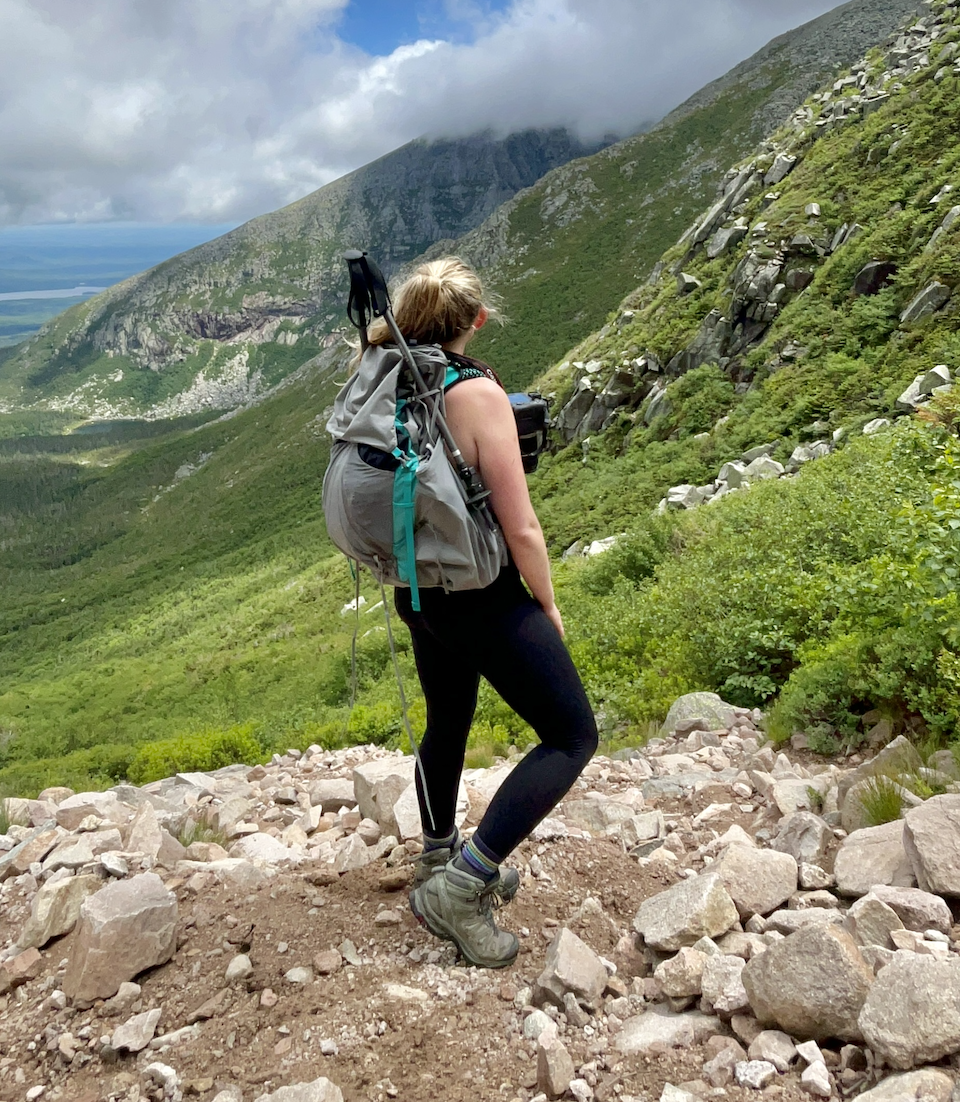
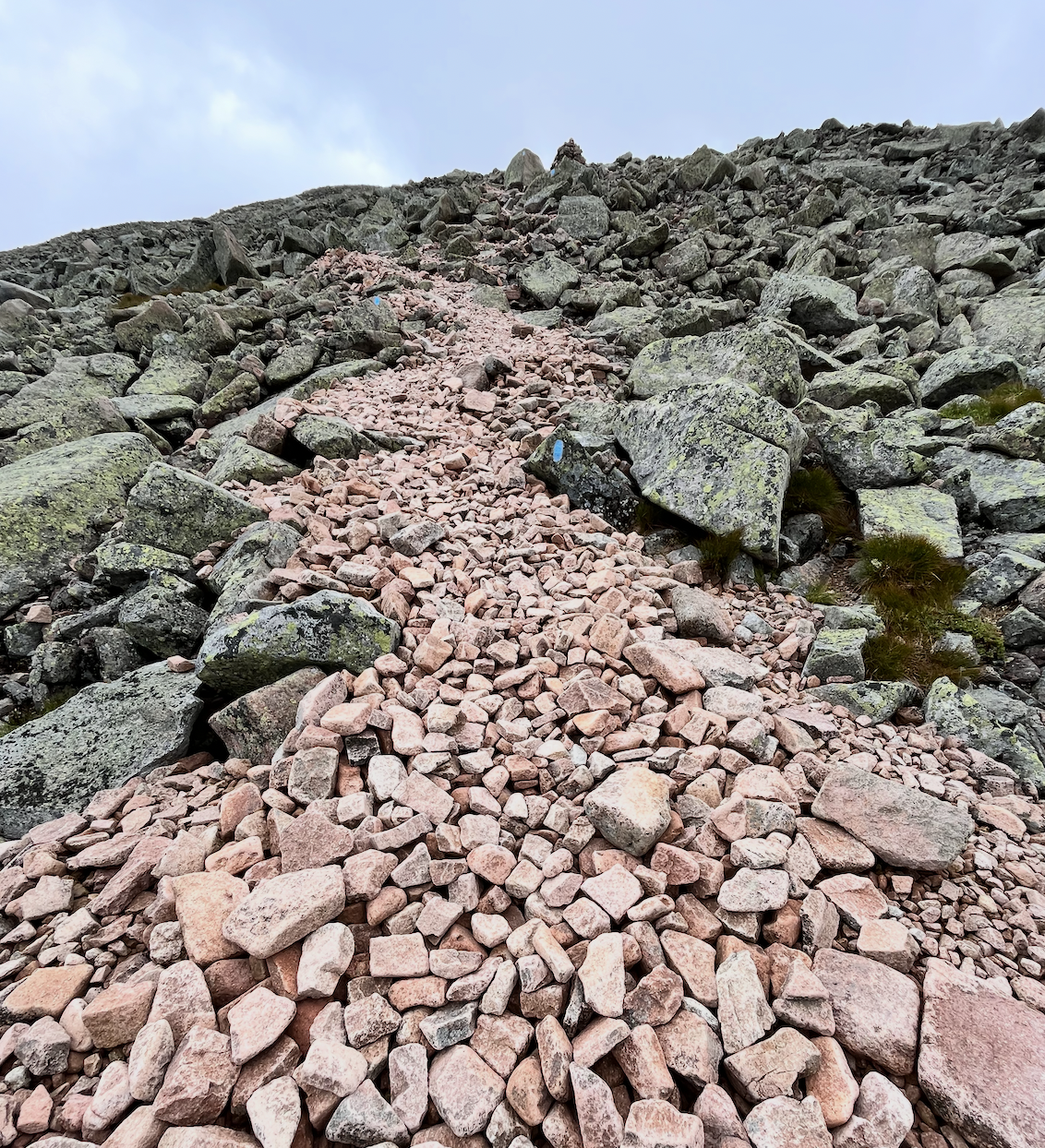
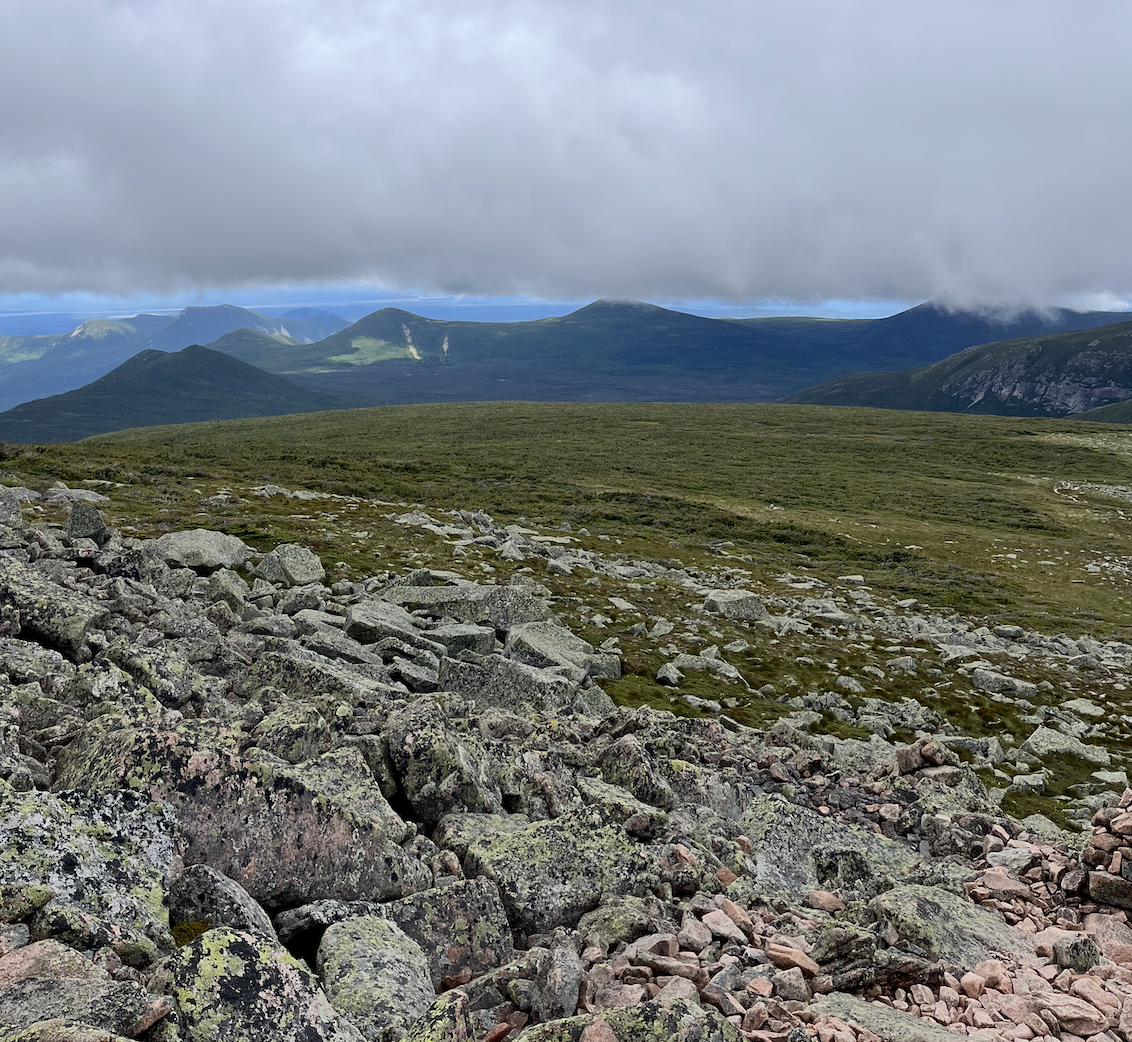

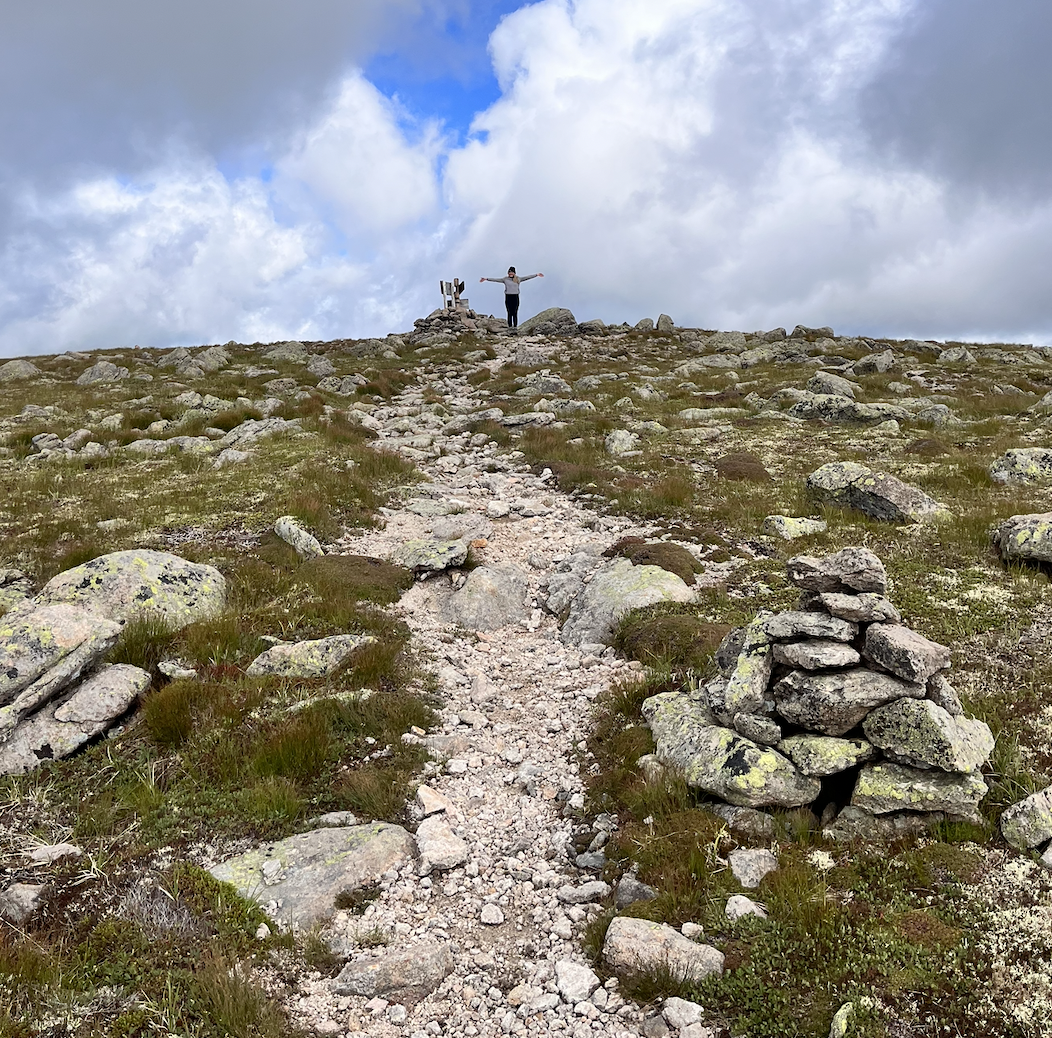
About Baxter State Park
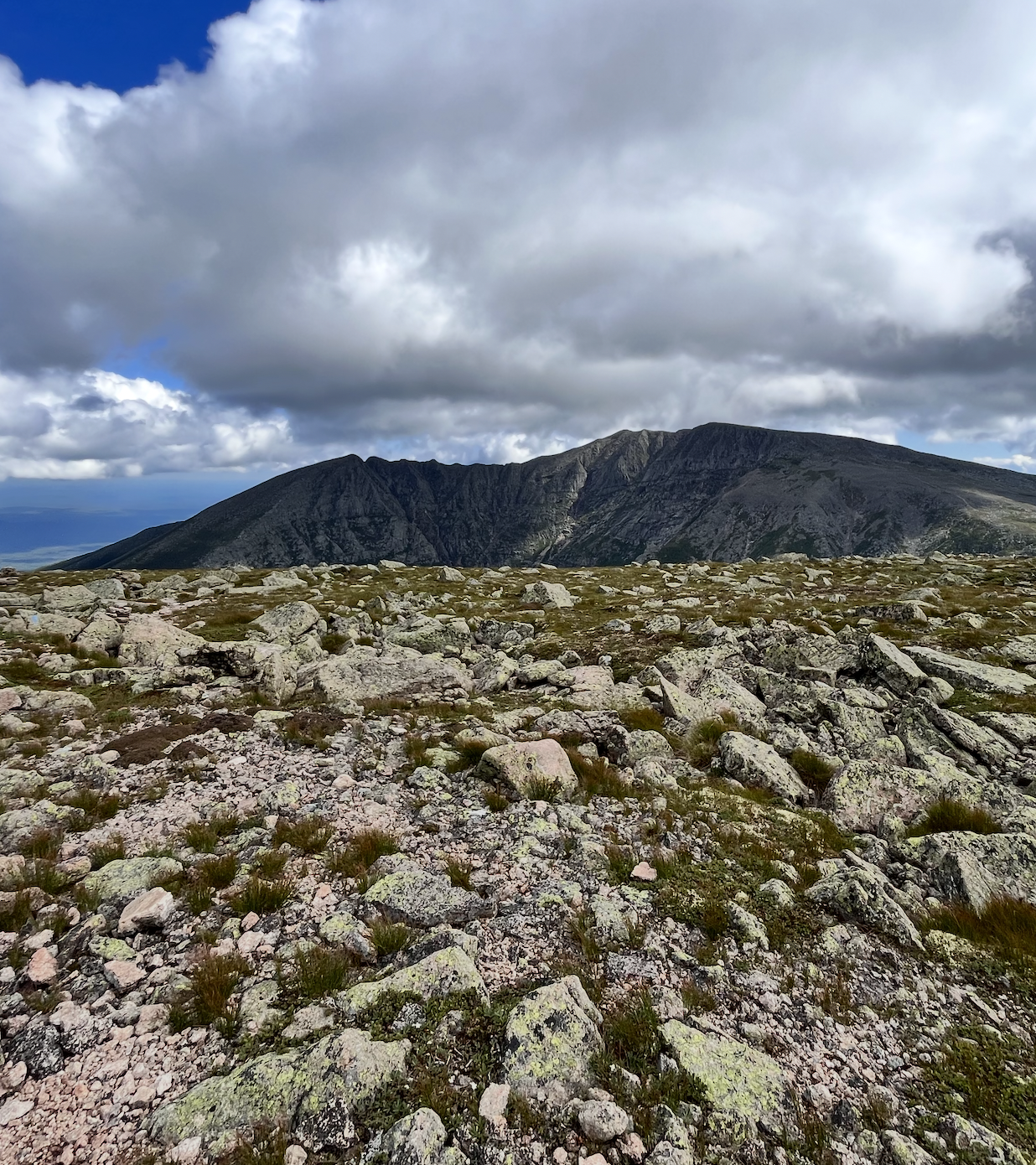
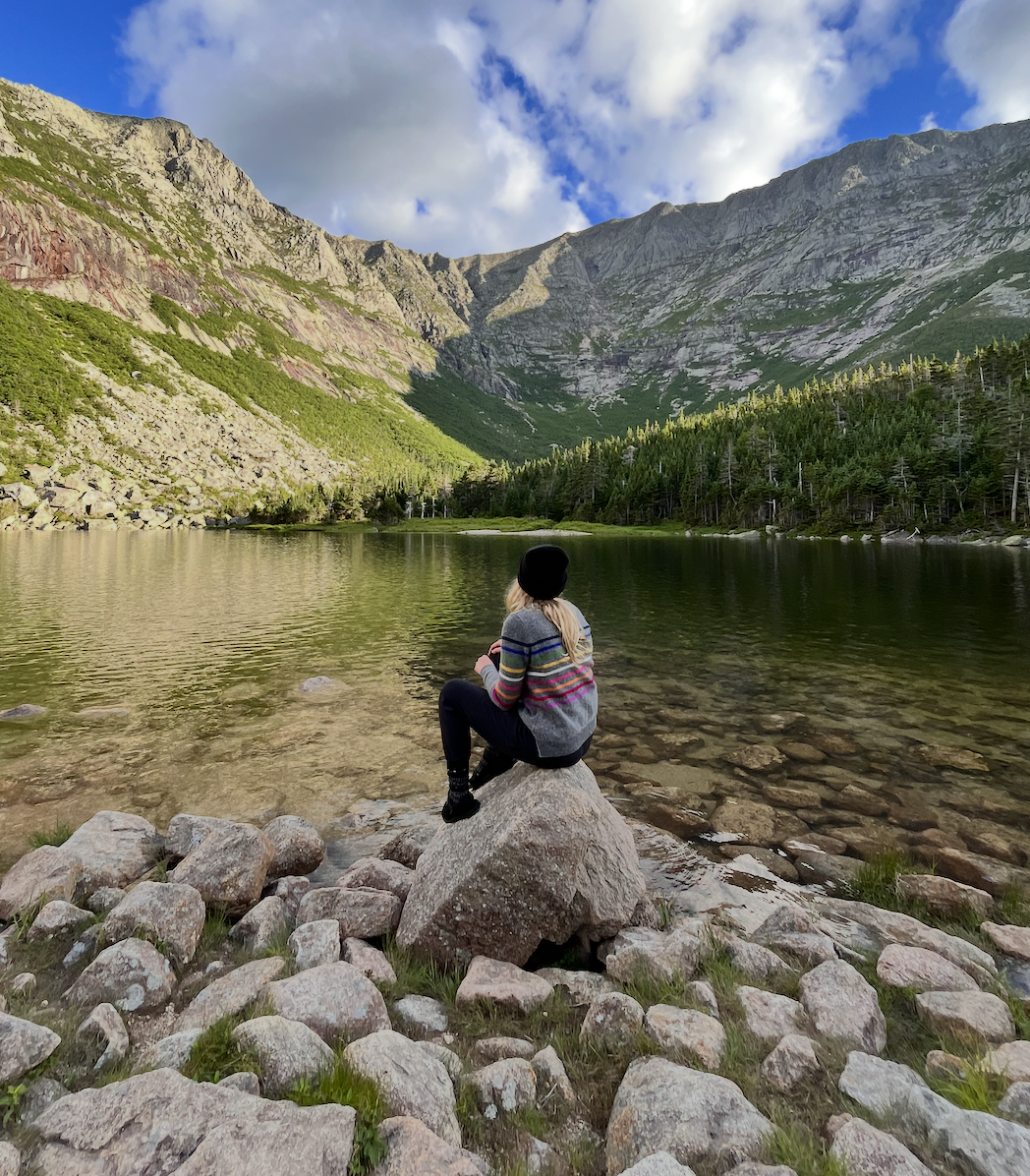
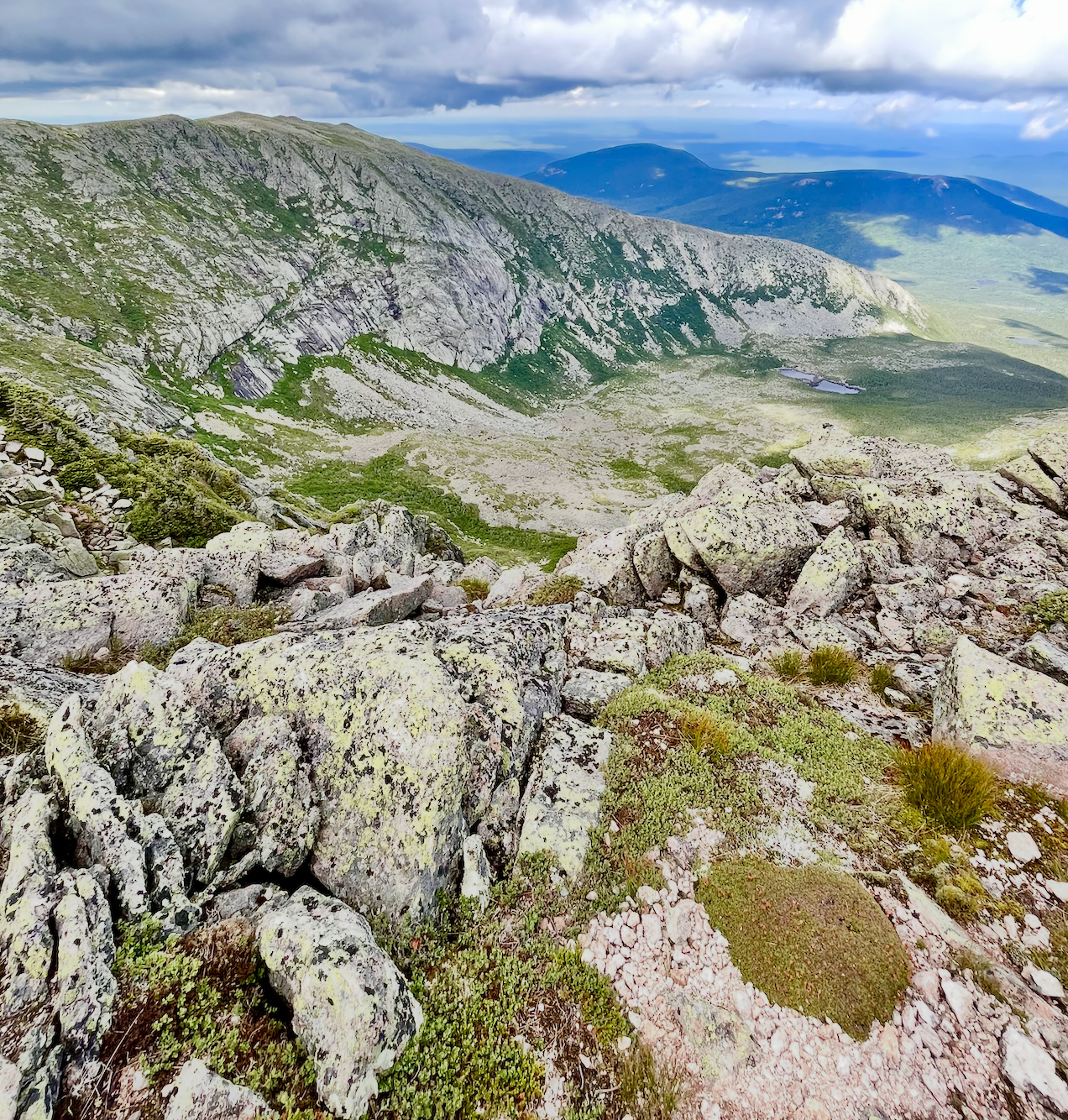
Baxter State Park’s “wilderness first, recreation second” mentality attracts outdoor enthusiasts from all over the world. Tens of thousands of people travel to the park every year to hike Katahdin—the crown jewel of Baxter State Park and the last peak on the Appalachian Trail—which stands 5,269’ tall. The park is home to 337 campsites, 10 campgrounds, and over 209,000 acres of forest, lakes, ponds, streams, and rivers, all surrounded by rugged Maine mountains. Baxter State Park is known for its commitment to conservation, maintaining a "forever wild" status with minimal development to preserve its natural beauty and diverse wildlife.
Things to Know Before Visiting Baxter State Park
All the roads in the park are dirt and/or gravel, so be sure your vehicle is in good shape before visiting
There is no cell service in Baxter State park, so either bring a satellite communication device or be prepared to go without
There are no stores or gas stations in the park—most campgrounds do sell campfire wood
Animals will try and steal or eat your food—be sure to keep a close eye on it
Camping and hiking reservations need to be made in advance
No pets are allowed in the park
You must carry out everything you carried into the park (trash, food scraps, bottles, etc.)
There is no running water or flush toilets in the park
About Katahdin
Katahdin was named by the Penobscot Indians, a name which translates to “The Greatest Mountain”. The Penobscot Indians lived in the regions surrounding Katahdin, and refused to climb it, as they believed an evil spirit named Pamola (a bird-like creature with the head of a moose) resided on it. The Penobscot also believed that Katahdin represented the beginning of life, a place of birth and spiritual enlightenment. The first record of a non-Native American summiting Katahdin was on August 13th, 1804. Charles Turner and his crew members, who were paid by the commonwealth of Massachusetts to survey land in the NorthEast, were guided by Native Americans who refused to go all the way to the summit for fear of encountering Pamola.
Things to Know Before Hiking Katahdin
On average, it can take 8-12 hours to hike most Katahdin trails
Every trail on Katahdin is extremely strenuous and has an elevation gain of about 4,000 feet
Due to the drastic change in elevation and climate zones, the weather at the top of Katahdin can be extremely different than the weather at the parking lot
Due to the high elevation, weather can change within a matter of minutes on Katahdin
How and When to Make a Katahdin Trailhead Pass (KTP) Reservation
Katahdin is the only mountain in Baxter State Park that requires a reservation, due to its popularity and to help limit the human impact on ecosystems that exist within Baxter State Park. If you are camping in Baxter State Park the night before your hike, you do not need a Katahdin Trailhead Pass.
Katahdin Trailhead Pass reservations can be made for any day of the Summer starting April 1st. Reservations can be made online, via phone (207-723-5140), or in person at the Baxter State Park headquarters in Millinocket. Personally, I find calling to make a reservation easiest. Keep in mind that there is a limit of two (2) KTP reservations per calendar month for the months of June-October. KTPs are not required in May. KTPs are non-transferable and non-refundable.
*You must arrive at the Togue Pond Gatehouse before 7:00a.m. on the day of your Katahdin hike to keep your reservation. At 7:00a.m., they will assume you are not coming and start giving away any “no-show” KTP reservations to people waiting in line to hike Katahdin that don’t have a reservation.
Accessing Baxter State Park
From Greenville
Follow Lily Bay Road through Beaver Cove and Kokadjo, all the way until you meet up with the Golden Road. Take a right onto the Golden Road and drive for 25 miles, until you see signs for Baxter State Park/Baxter State Park Road on your left. Turn onto Baxter State Park Road and continue on this road until you reach the Togue Pond Gatehouse.
From I/95 and Millinocket
From I-95, take Exit 157 and then turn left to continue on ME-157 West towards Millinocket. Drive for 11 miles, until you meet up with Katahdin Avenue. Turn right onto Katahdin Avenue, followed by a left onto Bates Street in 0.2 miles. Continue driving on Millinocket Road/Millinocket Lake Road—this will eventually turns into Baxter Park Road. Stay on Baxter State Park Road until you reach the Togue Pond Gatehouse.
Accessing the Katahdin Trailheads
All vehicles entering the park are required to stop and check-in with the ranger at the gatehouse. They will ask you if you are visiting for the day or staying in the park. Be prepared to provide them with a copy or picture of your KTP reservation, as well as a form of I.D (license, passport, etc.). They will give you a map of the park, a parking pass, a copy of park rules and regulations.
Katahdin Stream Trailhead
Start of Owl Trail and Hunt Trail (Appalachian Trail)
8-mile drive from Togue Pond Gatehouse
Located on Park Tote Road
Abol Trailhead
Start of Abol Trail
6-mile drive from Togue Pond Gatehouse
Located on Park Tote Road
Roaring Brook Trailhead
Start of Chimney Pond Trail and Helon Taylor Trail
8-mile drive from Togue Pond Gatehouse
Located on Roaring Brook Road
Preparing to Hike Katahdin
To prepare for your hike, be sure to:
Review trail maps and descriptions so you know what to expect from your hike
Share your plans with a friend (for safety reasons)
Check the weather forecast to ensure safe conditions
Katahdin Day Hiking Checklist
These are all the day hiking essentials. Take some time to consider what other “essentials” you should pack (ex: medication, walking poles, satellite communication device, etc.)
Navigation tools (compass and park map)
Enough water to last you all day (at least two quarts of water per person)
High-calorie food (nuts, protein bars, candy, sandwiches, etc.)
Flashlight or headlamp (you won’t be allowed to hike without one, a cell phone doesn’t count)
Three layers of clothing (moisture-wicking base layer, insulating mid-layer, and a wind and water-repellent outer layer—plus extra clothing in case a layer gets wet!)
A waterproof form of fire
Proper footwear (hiking boots with support, traction, and seasonally-appropriate warmth)
Whistle (in case you get off trail)
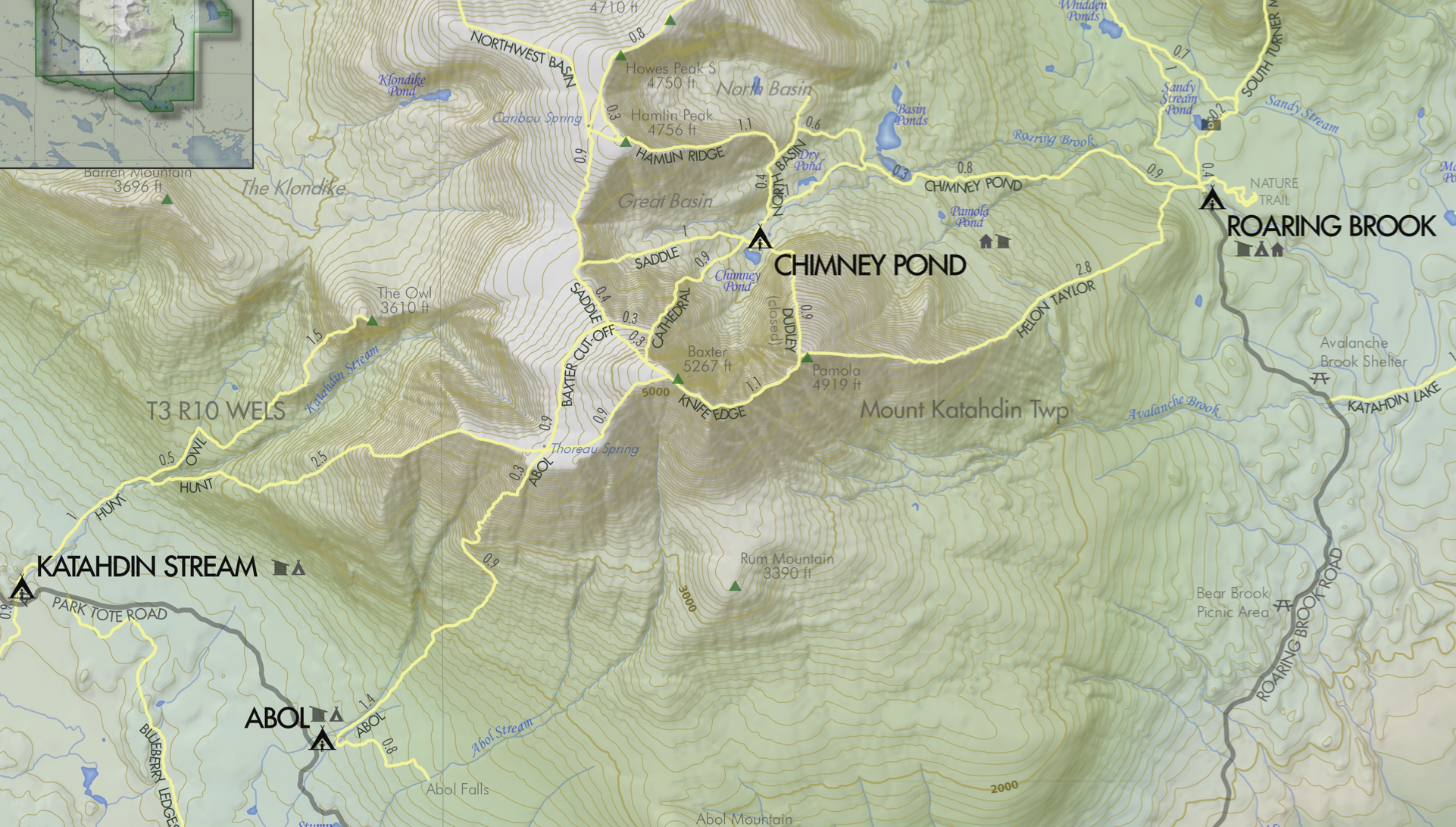
Image Credit: https://baxterstatepark.org/general-info/
Katahdin Trail Descriptions
Katahdin is a monster of a mountain—it’s home to three trailheads, five peaks, twelve trails, and numerous falls, ponds, and streams. Use our trail descriptions to help plan the best route for your hike.
Abol Trail (4.4 miles, 3,982 ft elevation gain)
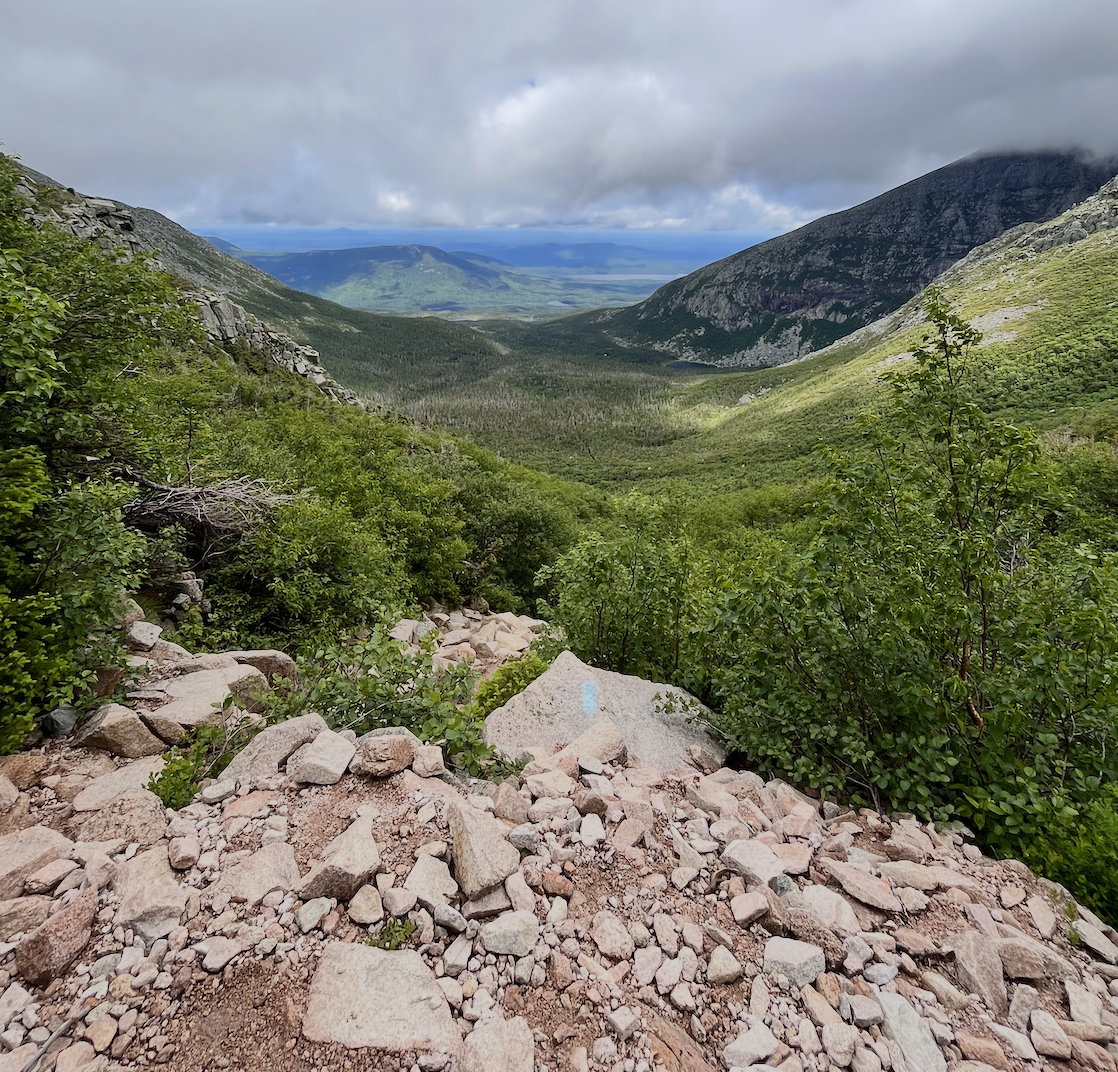
Abol starts at the Abol Campground and is the shortest route to Baxter Peak. It ascends via the ridge to the west of the Abol slide and challenges hikers to a steep, steady ascent with great views. The trail is fully exposed 2.5 miles into the hike, making it even more brutal during harsh winds, rain, or during hot, sunny days. The Abol Trail meets up with the Hunt Trail for the last remaining mile before reaching Baxter Peak.
Hunt Trail (5.2 miles, 4,188 ft elevation gain)
The Hunt Trail is the final leg of the Appalachian Trail—which means you may encounter (or get passed by) speedy thru-hikers during your hike. The trail begins at the Katahdin Stream Campground and starts with a gradual ascent on a rocky dirt path. The trail passes by beautiful Katahdin Stream Falls and climbs steadily until around mile two—when the incline increases and the challenging rock scrambling begins. After intersecting with Abol, the trail passes through the iconic (and deceiving) tableland. One final push will bring you to the infamous Baxter Peak.
Baxter Cut Off Trail (0.9 miles, minimal elevation gain)
The Baxter Cut Off Trail bypasses Baxter Peak and connects the Saddle Trail to Abol and Hunt Trails via a gradual hike through the tableland.
Helon Taylor Trail (3.2 miles, 3,413 ft elevation gain)
Helon Taylor Trail provides access to Pamola Peak (4,919 ft), which provides a breathtaking rugged view of the backside of Baxter Peak. It begins at Roaring Brook Campground and steadily inclines through beautiful forest while maneuvering over plenty of large rocks and boulders. After breaking tree line, the trail becomes much more steep and overrun with large boulders that require some pretty challenging rock scrambling. After reaching Pamola, hikers can continue on to Baxter Peak (5,267 ft) via the Knife Edge.
Dudley Trail (2.0 miles, 1,988 ft elevation gain)
Dudley Trail begins at Chimney Pond Campground and ends at Pamola Peak. The climb is extremely exposed and challenging, which is why it is frequently closed. One mile into the trail, you’ll pass by the Pamola Caves, which are fun to explore.
Knife Edge (1.1 miles, 365 ft elevation gain)
Knife Edge connects the Dudley Trail and Helon Taylor Trail to Baxter Peak. It will test your physical and mental endurance and strength. It is not well suited for inexperienced hikers, children, or anyone afraid of heights. This trail is completely exposed to the sun and wind and requires very challenging rock scrambling. It is a very narrow trail with extremely steep drop offs on both sides.
Chimney Pond Trail (3.3 miles, 1,425 ft elevation gain)
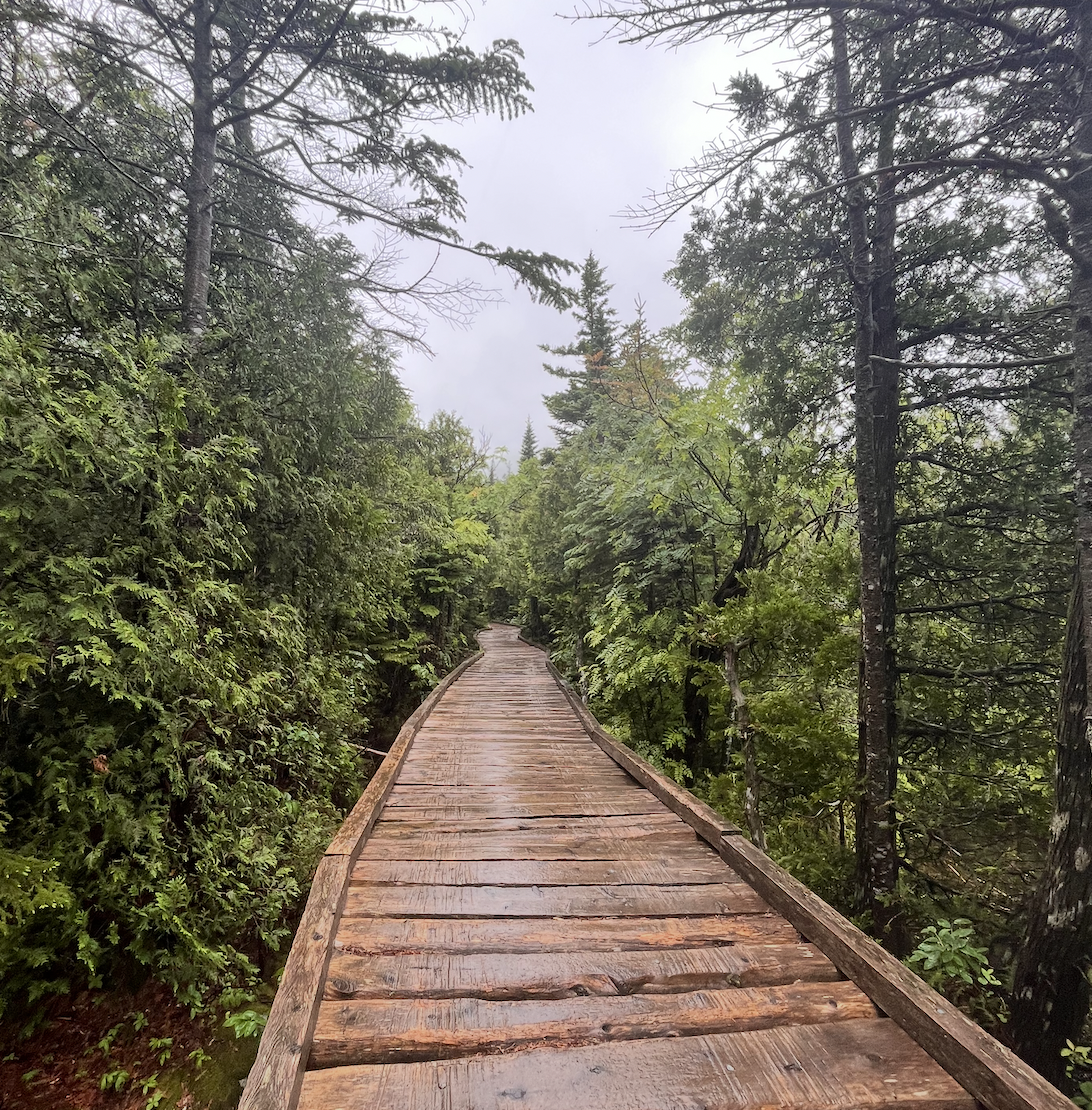
This rocky, forested trail brings hikers to iconic Chimney Pond Campground—a highly popular, scenic campground that makes a great home base or break spot for several Katahdin trails. Chimney Pond Trail starts at Roaring Brook Campground. The first 0.5 mile of trail follows Roaring Brook, while the remaining trail is comprised of wooden platforms and walkways, rock stairs, streams, and small ponds, and viewpoints. The trail is extremely rocky, which can be challenging for some. Click here to read my detailed blog post about hiking and camping at Chimney Pond.
Saddle Trail (2.2 miles, 2,353 ft elevation gain)
The Saddle Trail provides the most gradual ascent to Baxter Peak. This trail begins at Chimney Pond Campground and features large boulders and a lot of rock scrambling. Similar to other Katahdin trails—be prepared to encounter loose rock, stones, and gravel on this trail. This trail is commonly hiked up and down.
Cathedral Trail (1.5 miles, 2,353 ft elevation gain)
The Cathedral Trail is the shortest trail from Chimney Pond to Baxter Peak. It is extremely steep, exposed, and full of loose stones. This trail is not recommend to be hiked down.
Hamlin Ridge Trail (1.5 miles, 1,837 ft elevation gain)
The Hamlin Ridge Trail stems off of the North Basin Trail and then ascends over Hamlin Ridge before reaching Hamlin Peak. The ridge provides excellent views of the backside of Katahdin.
NorthWest Basin Trail (0.9 miles, 1,000 ft elevation gain)
A small portion of the NorthWest Basin Trail connects Hamlin Peak to the Saddle Trail, making it possible to summit both Baxter Peak and Hamlin Peak in one day. If the weather is good and you are an experienced hiker, I would even recommend dropping your bags at the intersection of Saddle and NorthWest Basin Trail to make your hike easier. The hike from the intersection to the summit of Hamlin Peak is nice and gradual.
Katahdin Summit Descriptions
Katahdin has five peaks—but the three most visited peaks are Baxter, Hamlin, and Pamola.
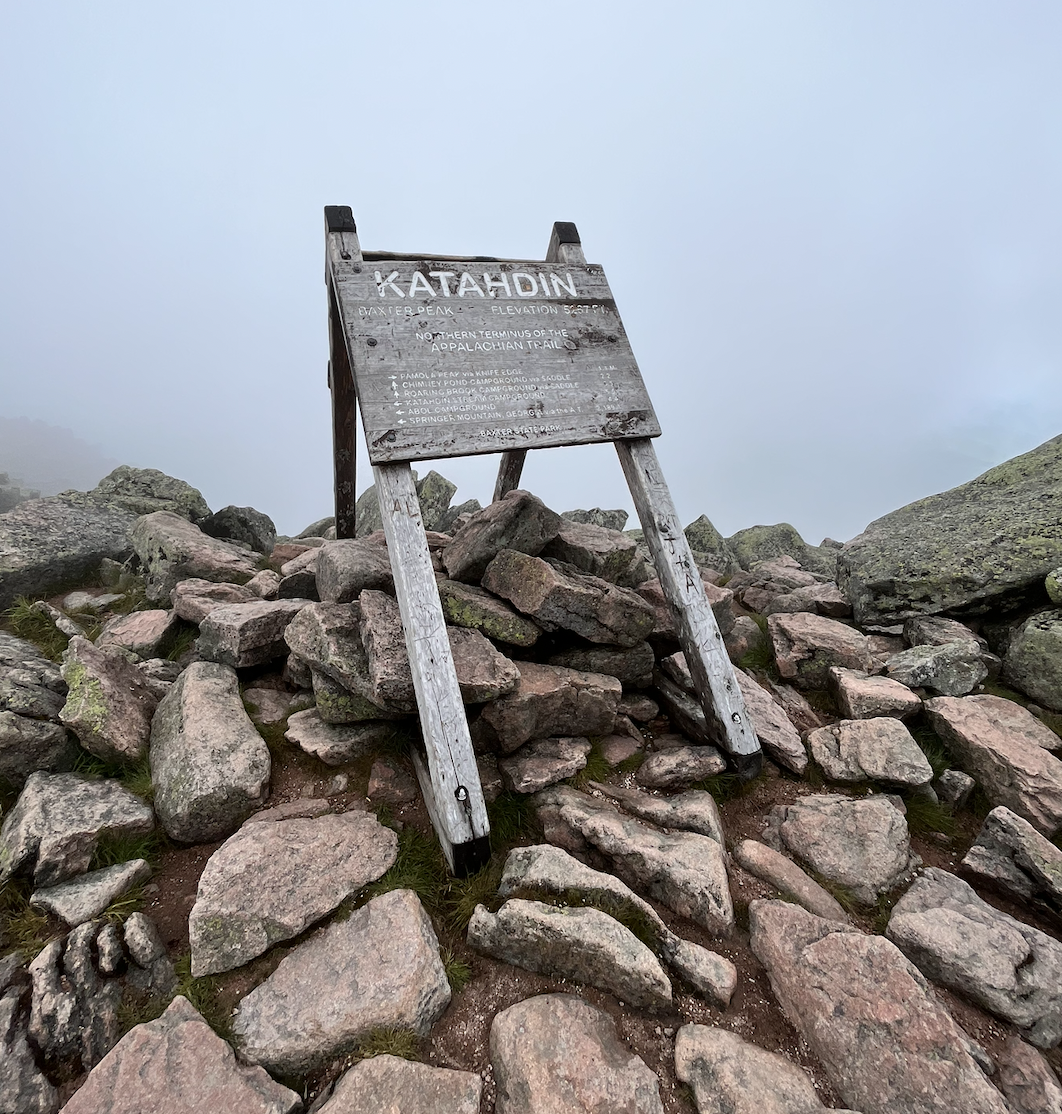
Baxter Peak (5,267 ft) is the highest peak on Katahdin—it’s where the iconic wooden Katahdin sign marks the final summit of the Appalachian Trail. On a clear day, it provides stunning 360-degree views of surrounding mountains, lakes, valleys, waterways, and towns.
Pamola Peak (4,919 ft) provides breathtaking views of the backside of Baxter Peak and Knife Edge, Chimney Pond, as well as surrounding mountains and waterways East of Katahdin.
Hamlin Peak (4,756 ft) overlooks the North Basin and Great Basin, both of which provide impressive dramatic views. This peak also provides North-facing views of mountains and ponds located in the middle and North end of Baxter State Park. On a clear day, you can see Baxter Peak, Pamola Peak, and Knife Edge from Hamlin Peak.
My Personal Experience Hiking Katahdin
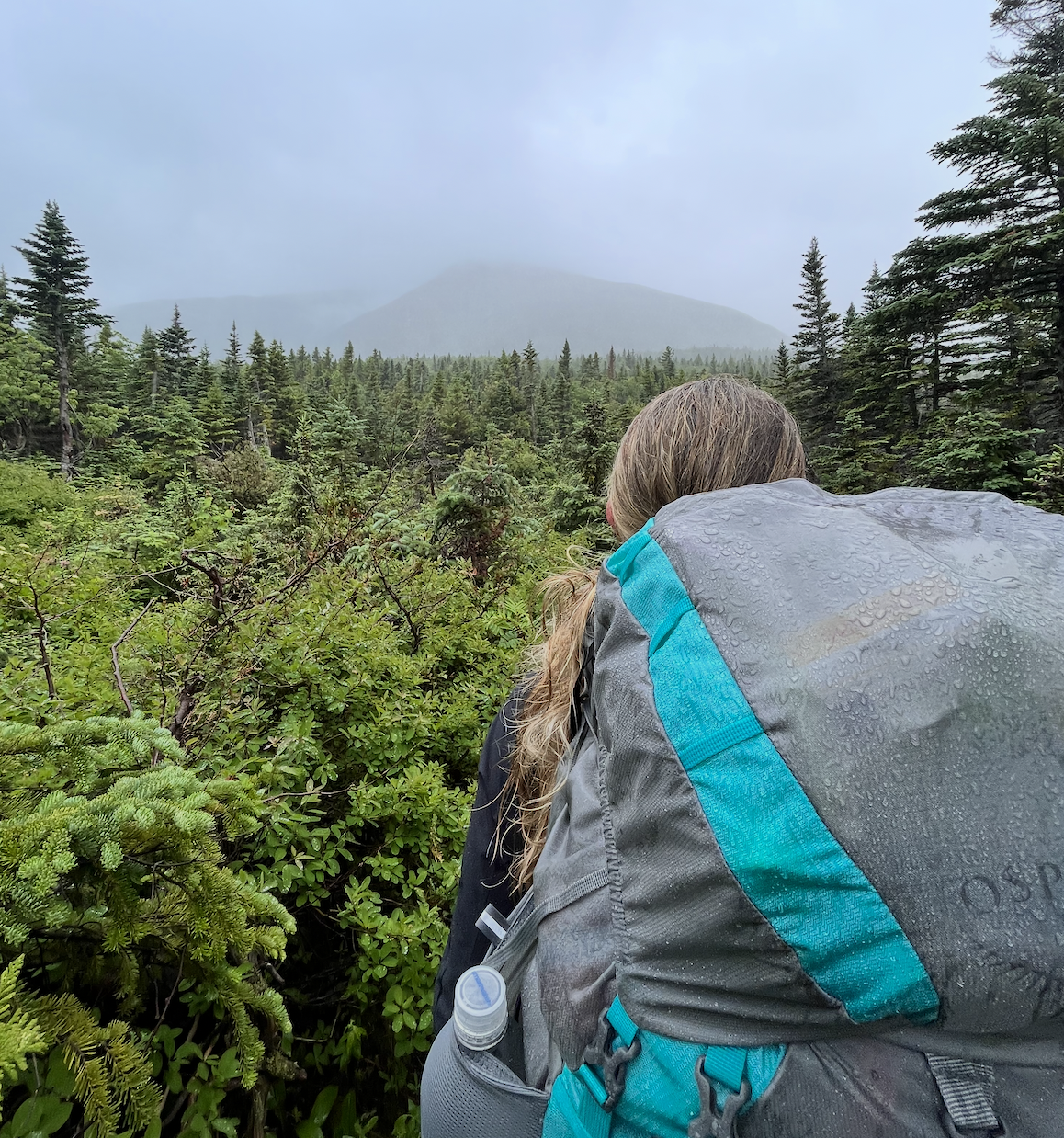
To be honest, I’ve had good and bad experiences hiking Katahdin. I can honestly say that I deeply appreciate the negative experiences, because they taught me valuable lessons—like never hike in bad weather (it’s just not worth the risk), be prepared for anything, and never underestimate the brutality of Katahdin.
Out of all the different trails I’ve hiked on Katahdin, my favorite route was Chimney Pond Trail > Saddle > Baxter Peak > Saddle > Hamlin Peak > Saddle > Chimney Pond Trail. I think there are a few reasons behind this. This hiking route offers the most gradual ascent and coverage from the elements in case of inclement weather. It also offers the opportunity to summit two peaks instead of just one. And lastly, it allows you the opportunity to stop at Chimney Pond—which is absolutely stunning.
My three least favorite trails were Knife Edge (I am afraid of heights and some of the rock scrambling was too intense for me) the Hunt Trail (this is almost entirely due to hiking it in wet conditions, which made all the rocks slippery) and the Cathedral Trail (we descended this trail once, which is not recommended, and now I understand why). All three of these hiking experiences taught me a lot—which I can now pass along to you in hopes that you will make safer, more informed hiking decisions.
Leave no Trace on Katahdin
When it comes to enjoying time outdoors, remember the golden rule: Leave No Trace. It’s as simple as picking up after yourself, staying on the trails, and leaving nature just as beautiful as you found it. By practicing Leave No Trace, you help preserve the magic of Maine for future adventurers to enjoy, so everyone can keep enjoying the same beautiful, wild world we love.
Interested in camping in Baxter State Park? Explore our camping blog posts.
Need more Maine hiking inspiration and tips? You can find them all here.
Want more Maine travel inspiration? Follow MyMaine on Instagram!
If you love spending time outdoors in Maine, be sure to scroll down to the bottom of the page (or click here) and subscribe to my e-mail list! By doing so, you’ll be the first to receive all of my latest and greatest outdoors-y Maine content straight to your inbox! And I solemnly swear that I won’t sell your e-mail to spammers or scammers living in their parent’s basement.