The Maine Hiking Essentials: What to Pack and Wear on a Hike in Maine
Maine’s beautiful mountains, waterways, and valleys create the perfect backdrop for a scenic hike. With trails of every kind—gentle day hikes, backcountry treks, family-friendly trails, waterfall hikes, rugged 4000’—there’s something here for every type of hiker.
Whether you’ve never hiked in Maine or just want to learn more about hiking, this guide will help you better understand what to pack and wear on a day hike in Maine. Planning ahead and packing all the hiking essentials will help keep you have the best outdoor experience possible and return home safely. As the park rangers say, the goal of hiking should always be to make it back to your car safely, not to summit the mountain.
*Some of the links shared in this post may be affiliate links meaning I make a small commission off of your purchase with no extra cost to you. This allows me to continue to create free content for my readers. Thank you for your continued support!
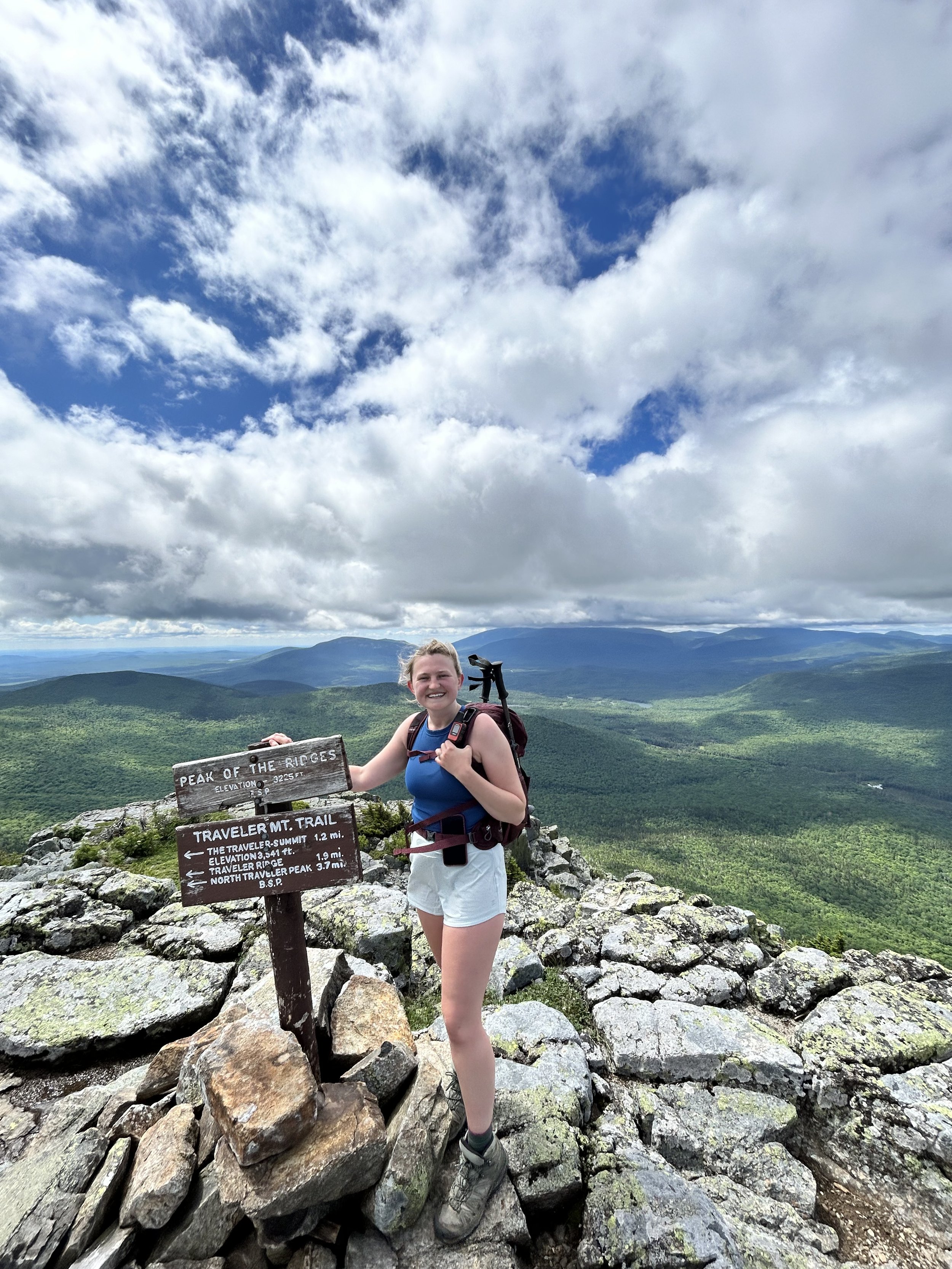
What to expect on a day hike in Maine
When hiking in Maine, you can expect a range of conditions depending on the elevation of the hike.
Terrain
Regardless of elevation, you will most likely encounter dirt trail, rocky trail, large granite slabs, rock ledges, and dense forest.
Temperatures
Maine is known for its fluctuation in temperatures. Be sure to look up the weather forecast ahead of time so you can prepare for any significant changes in temperature.
Daylight
The amount of daylight changes significantly from season to season—so be sure you know what time sunrise and sunset take place, so you can plan accordingly.
Water crossings
Maine is full of rivers, streams, brooks, etc. It is likely that you may have to cross a body of water during your hike. Use common sense and make sure you have the right gear to get across.
What to wear on a day hike in Maine
The key to maintaining a comfortable temperature (not too hot and not too cold) during a hike is dressing in layers. How many layers you need largely depends on the weather, hike length, and hike difficulty. For most easy to moderate hikes throughout Maine, I recommend wearing two layers and then stowing another layer that you can pull out if needed. Most hikers use a three-layer system that involves a base layer, mid layer, and an outer layer. This will need to be adjusted every season.
Base layer: a lightweight layer of clothing that will help keep sweat and any other moisture off your skin and keep you dry.
Mid layer: an insulating layer that helps keep you warm—like a fleece, down vest, or down jacket.
Outer layer: ideally, this layer is water and wind proof, such as a rain jacket or shell jacket. In warmer temperatures, this layer can be stowed in your pack and taken out as needed.
What to pack for a day hike in Maine
Spare change of clothes
First things first, always should pack a spare change of clothes. Maine weather can change on a dime, so it’s crucial to have an extra shirt, pair of pants, underwear, socks, etc. There’s nothing worse than getting rained on or stepping in a huge pile of mud and not having any clothes to change into. I typically pack these in a dry sack in the bottom of my pack, so they’re out of the way and stay dry.
Hats and mittens
I also like to put a warm hat and a pair of waterproof mittens or gloves in the dry sack. These can be used to keep warm on the summit or if I get lost and have to stay in the woods overnight.
Fire
Speaking of warmth, I ALWAYS make sure to pack waterproof matches in my day pack. They are light, don’t take up a lot of space, and could literally save your life. You should never hike in the woods without them! Store the matches in a waterproof bag or container. Waterproof matches are ideal.
First aid kit
This is another must-have item, because injuries are never predictable or fun. Having a first aid kit handy could save your life, especially since emergency personnel may take a while to reach you. Make sure your first aid kit is fully stocked with emergency blankets, multi-sized bandages, pain relievers, disinfectant, etc.
Navigation tools (paper map and compass)
These two go hand in hand for a reason. You should always look over the trail you’ll be hiking prior to actually hiking it, so you know what to expect in terms of length and difficulty. Maps are great for helping you find your way if and when plans change due to unforeseen circumstances. Compasses are helpful tools for making sure you’re going the right direction and they can help get you back on track if you lose your way.
Food
Hiking can easily turn into an all-day outing. Think of all the calories you eat normally, then add on the calories you burn while hiking 1-5 hours. That is how much food you should be bringing with you. Pack foods with high calories and a lot of protein, such as: nuts, protein and granola bars, and candy. If possible, also store your food in a dry sack to prevent it from getting wet.
Water, water, and more water
Water is important. You can never depend on having access to a reliable water source. A good rule of thumb is to always bring at least 2 quarts of water per person while hiking.
Flashlight or headlamp
Sometimes, hikes don’t go as planned. One of the most common (and most dangerous) situations is people hiking past their turnaround time because they are obsessed with summiting. Then, they find themselves hiking down in the dark, which is hard, confusing, and scary. Without a proper flashlight or headlamp, it would be nearly impossible to find your way back down the mountain. Cell phones don’t count as a flashlight due to their insufficient battery life.
Weather appropriate gear/clothes
This changes every season. In the summer, wear moisture-wicking clothes that dry fast and bring a rain jacket for when those summer lightning storms hit. In the Fall, light layers are best, as the mornings tend to be chilly, followed by a quick mid-day temperature spike. In the winter, thick wool base layers followed by a thick fleece and a down jacket are must-haves, as well as snowshoes for breaking trail or micro spikes for walking on ice.
Pocket knife or multi-tool
Last but not least, a pocket knife is extremely versatile and can come in handy in a number of situations. I never hike without one!
Leave no trace
When it comes to enjoying time outdoors, remember the golden rule: Leave No Trace. It’s as simple as picking up after yourself, staying on the trails, and leaving nature just as beautiful as you found it. By practicing Leave No Trace, you help preserve the magic of Maine for future adventurers to enjoy, so everyone can keep enjoying the same beautiful, wild world we love.
Interested in more Maine hiking information and tips? You can find them all here.
Want more Maine travel inspiration? Follow MyMaine on Instagram!
If you love spending time outdoors in Maine, be sure to scroll down to the bottom of the page (or click here) and subscribe to my e-mail list! By doing so, you’ll be the first to receive all of my latest and greatest outdoorsy Maine content straight to your inbox! And I solemnly swear that I won’t sell your e-mail to spammers or scammers living in their parent’s basement.
With love,
My Maine