How to Choose a Sleep Setup for Tent Camping in Maine
In Maine, we have a famous saying—”if you don’t like the weather, wait five minutes”. Our state is known for its variable weather conditions during every season, especially Summer. If you have a Maine camping trip scheduled, you’ll want to make sure you’re well prepared—which includes having the right gear, including a sleeping pad, sleeping bag, tent, pillow, etc., to ensure a good night’s sleep. Because a restful night of sleep makes for a much more enjoyable camping experience.
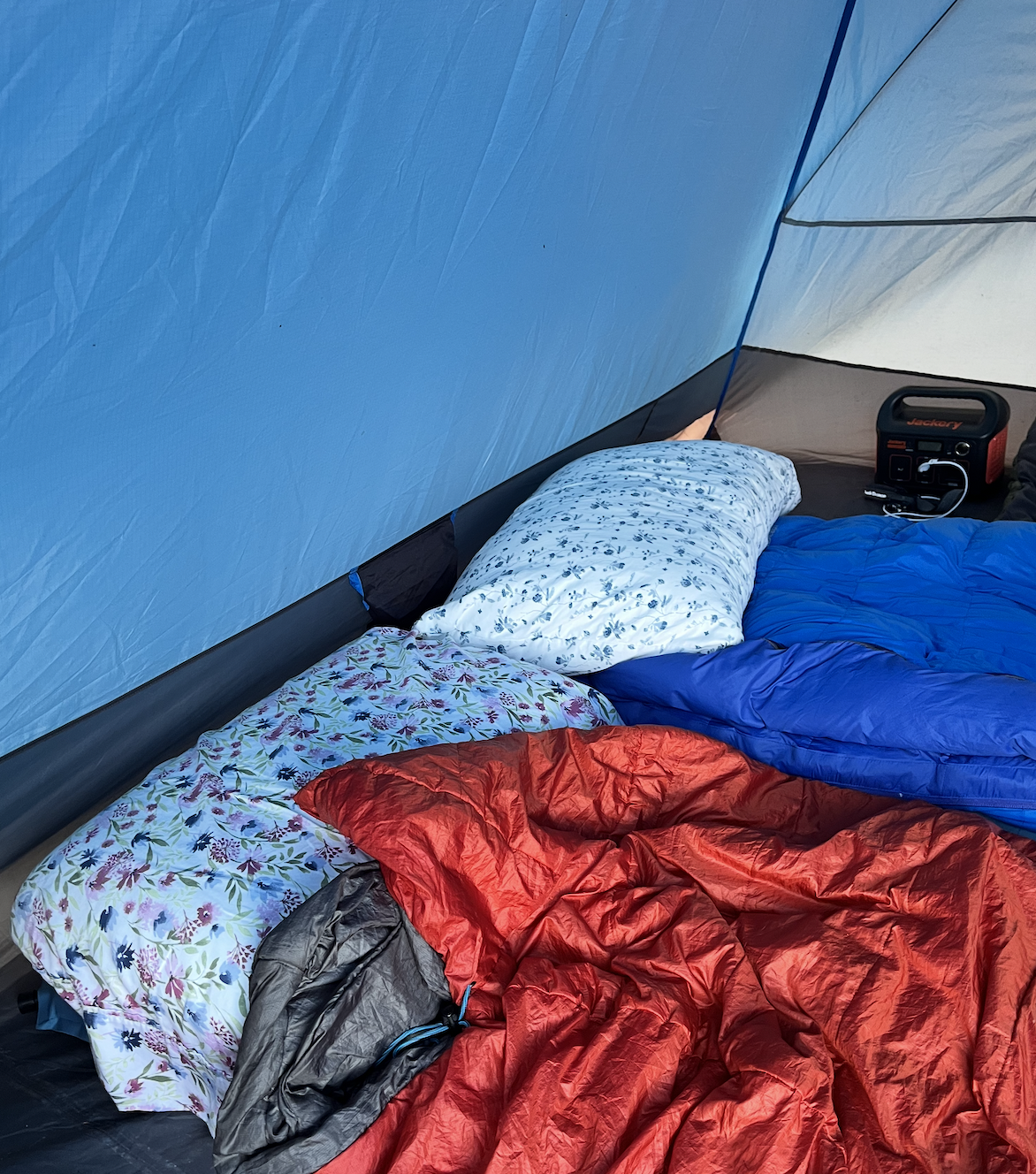
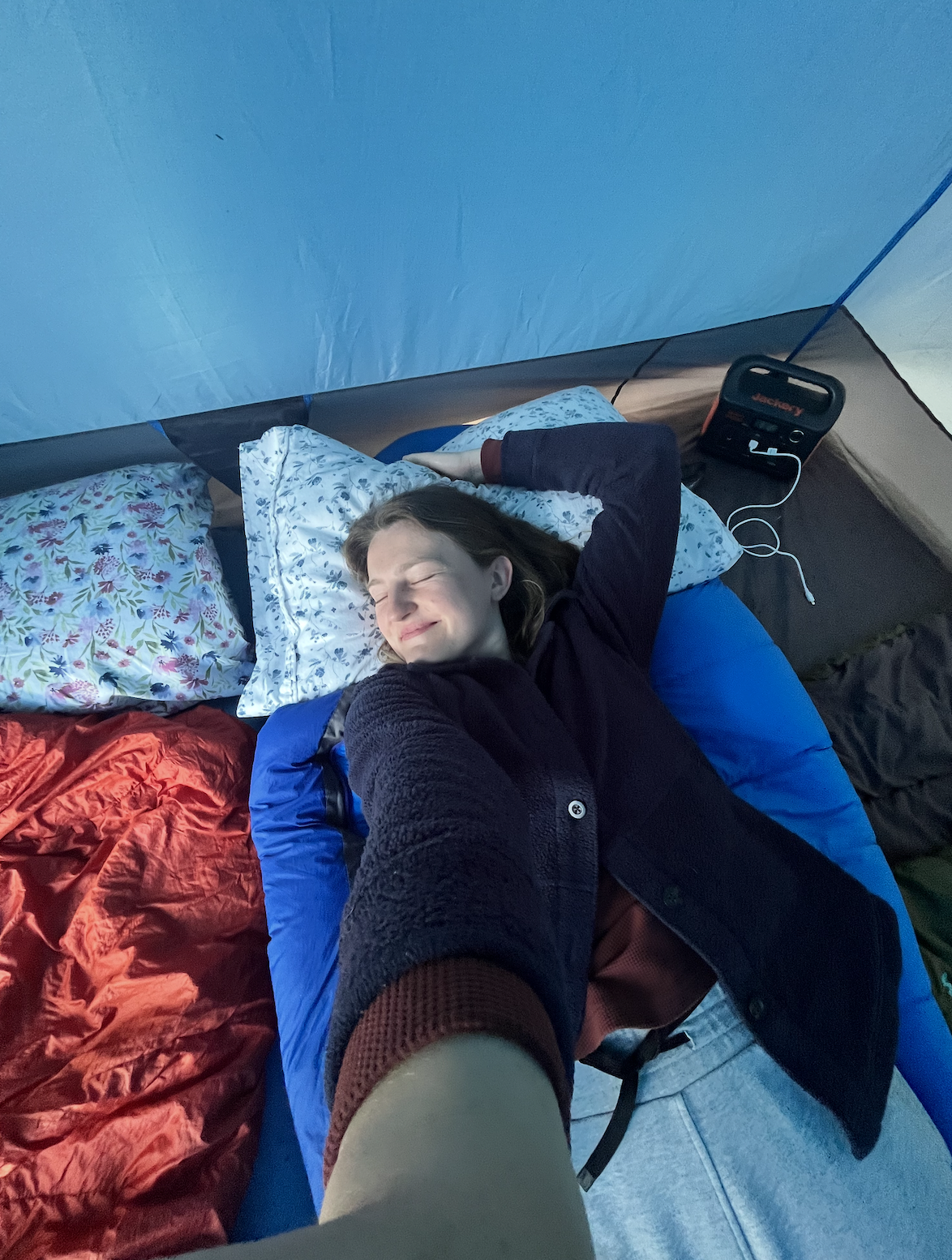
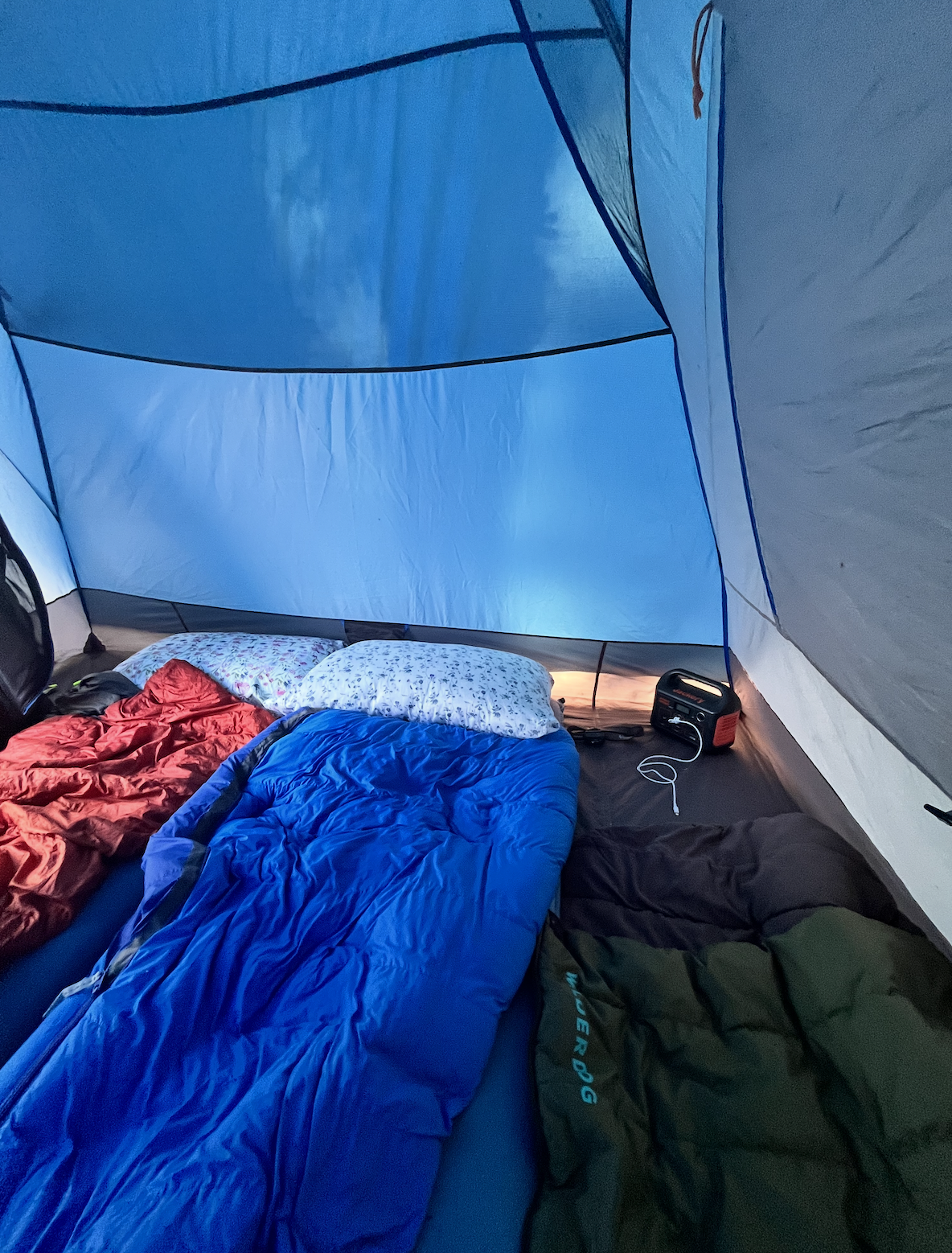
In this post, you will learn everything you need to know about creating a comfortable tent camping sleep setup—how to choose a tent, mattress, sleeping bag and pillow as well as product recommendations and several tips for how to get a good night’s sleep while camping.
Choosing a Tent
There are several factors that go into choosing a tent for your camping trips. For instance, how many people does it need to fit? During what seasons will you be using it? What kind of features do you need?
Tent Size
I recommend upsizing your tent capacity by one person. So, if there are two of you and a small child, I would recommend a 4-person tent. Or, if there are five people sleeping in the tent, I would recommend a 6-person tent. I think you get the picture.
Tent Seasonality
Some tents are made to be used only in the Summer—others in the Winter, and some are made to be used throughout several seasons. Just be sure that when you purchase a tent to double check what seasons your tent was created for. If you’re looking to purchase a tent for use in the Summer, most three-season tents will work great.
Tent Features
Everyone has a different idea of what features they may want in a tent. Make a list of your wants and consult them while shopping. For me, I usually look for a specific style of tent, quality of tent poles and fabric, ventilation, and footprints.
Tent styles
I prefer a dome-style tent over a cabin-style tent because they’re great at holding up to strong winds and can be set up very quickly.
Poles
Look for poles that are made of aluminum. These will be stronger and more durable than poles made from fiberglass.
Fabric
Look for tents made of high denier (thicker) fabric. A high denier (D) fabric is generally more durable, resistant to tearing, and heavier. Low denier (10D–30D) is usually used for lightweight tents, Medium denier (40D–70D) is standard for most 3-season tents, and high denier (75D and above) is great for base camp tents or long-term tent use.
Ventilation
Be sure to check how many mesh panels are in the tent. More panels = more ventilation to help the tent (and everything inside it) from becoming and staying damp.
Footprint
We always invest in a footprint for our tents. A footprint is a piece of fabric that goes under your tent to help protect it from rocks, twigs, dampness, etc. It’s far superior to a tarp, because they are made to fit your specific size tent and won’t cause water to pool underneath your tent. You usually have to purchase the footprint separately from the tent, but trust me when I say they are 100% worth it.
Tent Recommendations
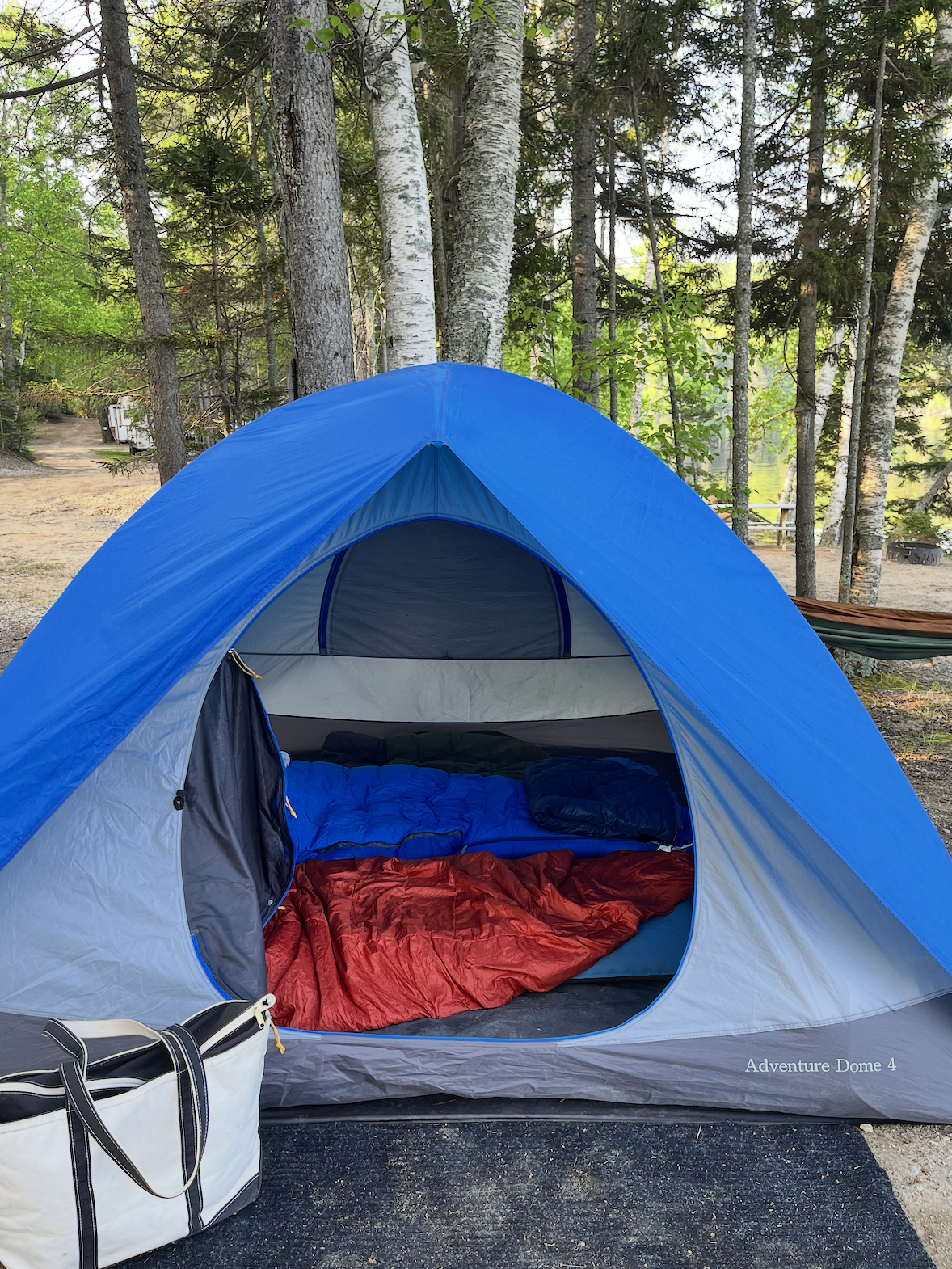
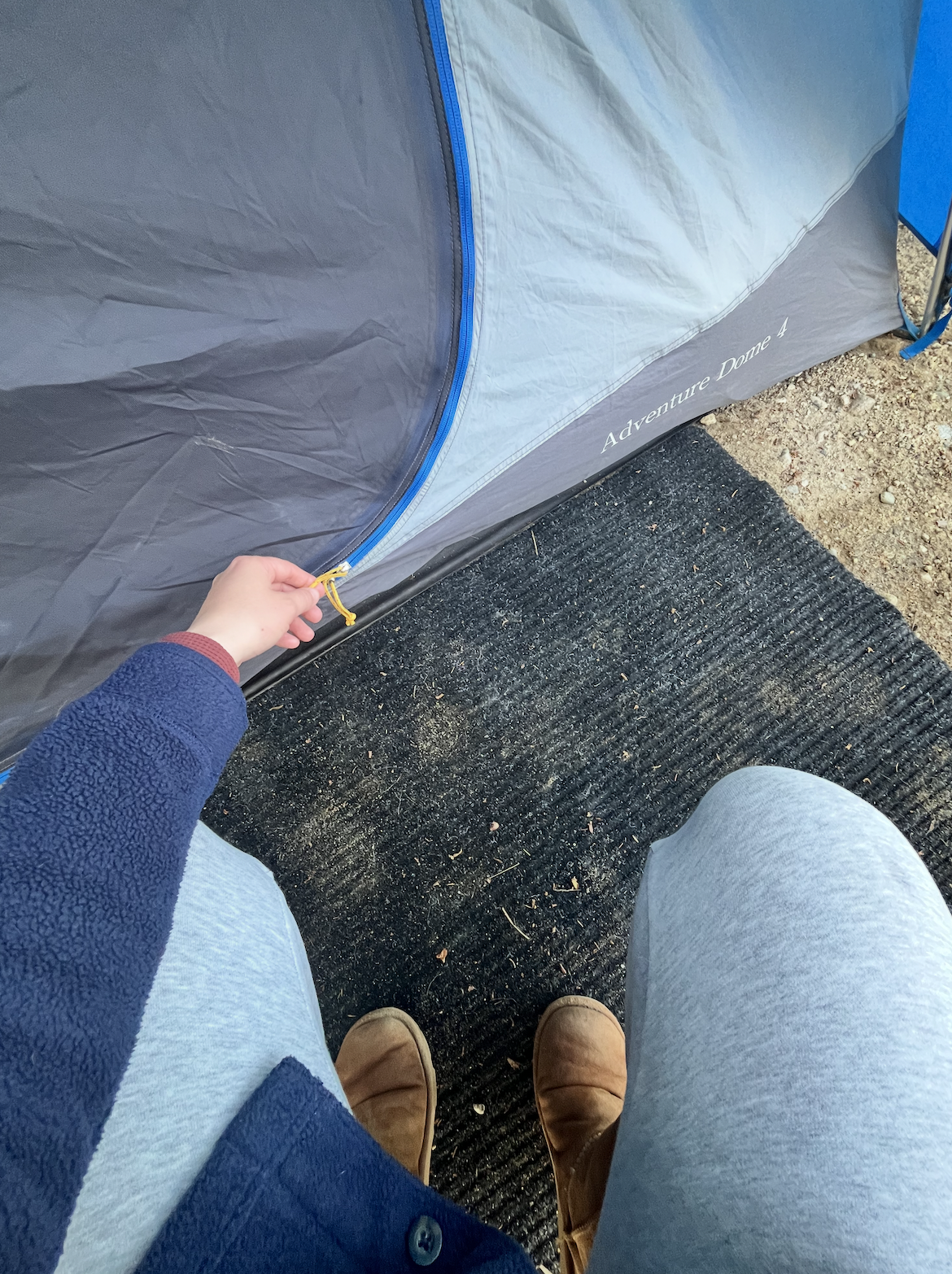
My tent: L.L Bean Adventure Dome Tent (4-person, 6-person)
We have been using this tent for 5+ years on all our Maine camping trips (both in campgrounds and wilderness/remote camping). We have the 4-person tent for my husband, myself, and the dog and it’s perfect. This tent has been through hell and back—wind storms, rain storms—and always delivered. The reviews on the L.L Bean website give it 3.5 stars (you never know how experienced the people writing these reviews are), but I recommend it with confidence.
Family Tent: L.L Bean Acadia Tent (4-person, 6-person, 8-person)
Solo Camping: L.L Bean Access Tent (2-person)
Choosing a Sleeping Pad
Thanks to the popularity of camping, many variations of sleeping pads exist today. Sleeping pads last far longer than an air mattress and provide just as much comfort. Let’s review the various types and features of sleeping pads.
Sleeping Pad Types
Air Pads (must be filled completely with air), self-inflating pads (inflate on their own, can adjust firmness by letting out air, and more durable than air pads) and foam pads (made of dense foam, lightweight, tend to be stiff and firm).
Sleeping Pad Size
Sleeping pads come in various different shapes and sizes and can range from one inch to several inches thick. Some are made to be used by a single person, others are made for two people.
Sleeping Pad Seasonality
Like most camping essentials, certain sleeping pads are made to be used in certain seasons or temperatures. This is why they vary in thickness and warmth.
Features
Warmth
As you sleep, your body is constantly losing heat to your surroundings. To stay warm, you’ll want to buy a sleeping pad with an R-value well-suited for the weather conditions you are camping in. R-value measures how well a sleeping pad retains warmth.
R-value less than 2.0 is suitable for 50 degrees Fahrenheit and above (perfect for Maine summers)
R-value 2.0 to 3.9 is suitable for 32 degrees Fahrenheit and above (perfect for shoulder seasons in Maine)
R-value 4.0 to 5.4 is suitable for 20 degrees Fahrenheit and above
R-value 5.5 and greater is suitable for 0 degrees Fahrenheit and above
Thickness
How thick you need your sleeping pad to be, depends on your comfort needs, body type, and how you sleep. Side sleepers tend to need a thicker pad between 3-4 inches thick. Back sleepers can usually get away with a pad 1-3 inches thick. Campers that are larger may want a thicker pad (3-4 inches) for additional sleeping support. I would recommend going to the store to try out the pads and see what feels best.
Size
Make sure your hips, shoulders, and feet all fit on the sleeping pad. Certain sleeping pads come in extra wide and extra long sizes to comfortably accommodate campers of all sizes.
Inflation Type
Be sure to carefully review how your sleeping pad will need to be inflated and deflated. Some are self-inflating, others have attached inflation/deflation valves, and some must be inflated with your mouth or by hand. This is crucial information to have before you set out on your camping trip so you can be prepared.
Sleeping Pad Recommendations
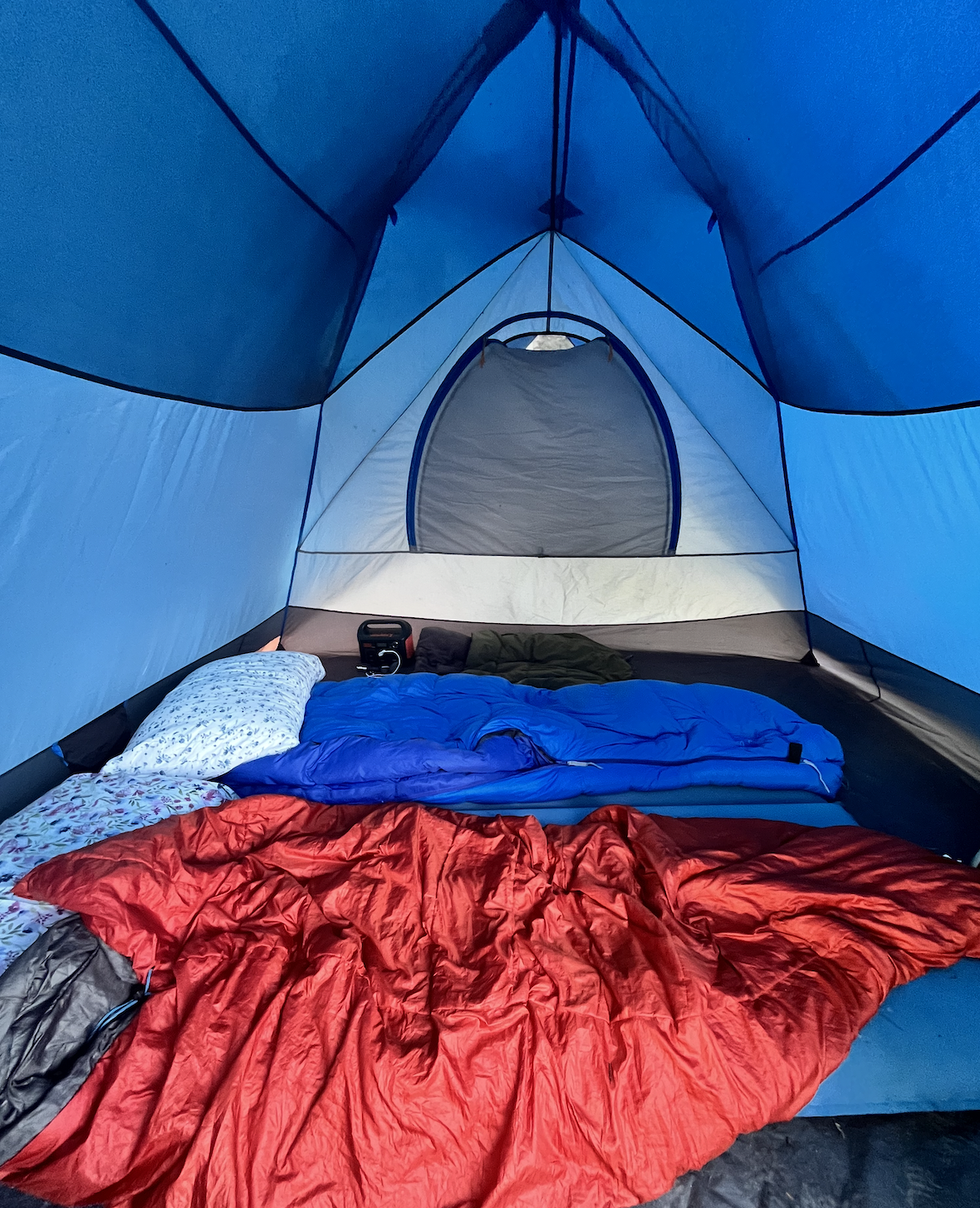
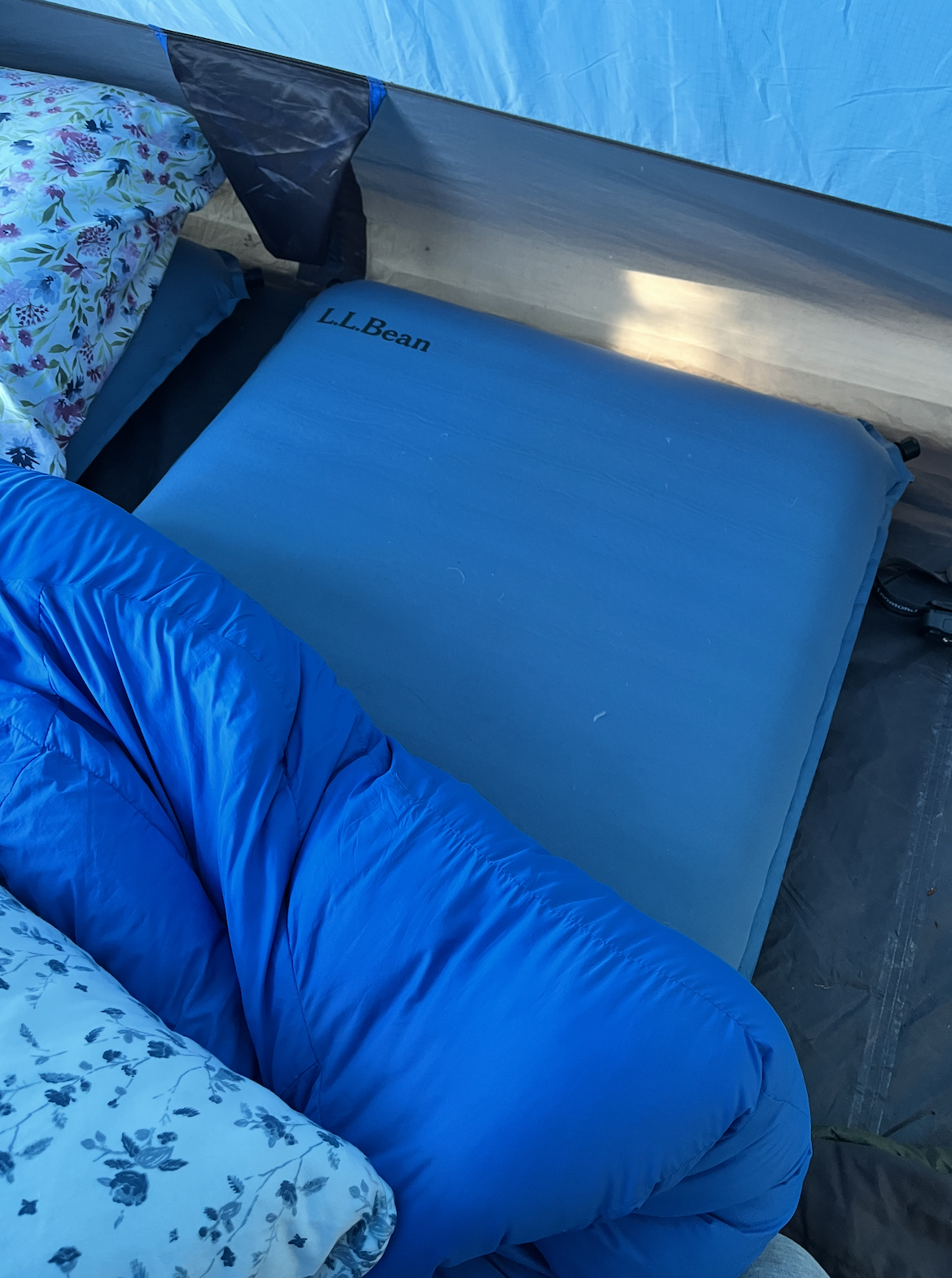
My pick: L.L.Bean Adventure Futon Sleeping Pad (2.5-inch pad, comes in regular, long, and double sizes)
This sleeping pad is plenty comfortable for myself (a back sleeper) and my husband (a side sleeper). It also does a great job retaining heat.
Comfort pick: Therm-a-Rest LuxuryMap Self-Inflating Foam Camping Sleeping Pad (3-inch pad, comes in regular, large, XL)
Extra comfort pick: Therm-a-rest MondoKing 3D Self-Inflating Camping Sleeping Pad (4-inch pad, comes in large and XL sizes)
Choosing a Sleeping Bag
There are few things better than curling up in your sleeping bag after a fun day of camping. Let’s review how to choose a sleeping bag that will be comfortable and warm.
Sleeping Bag Shapes
Sleeping bags come in many shapes—rectangular, mummy, double, etc. So it’s always a good idea to try them either before you buy or before you go camping to make sure you will sleep comfortably in them. Rectangular tend to have the most room and mummy-shaped sleeping bags tend to be the warmest.
Sleeping Bag Temperatures
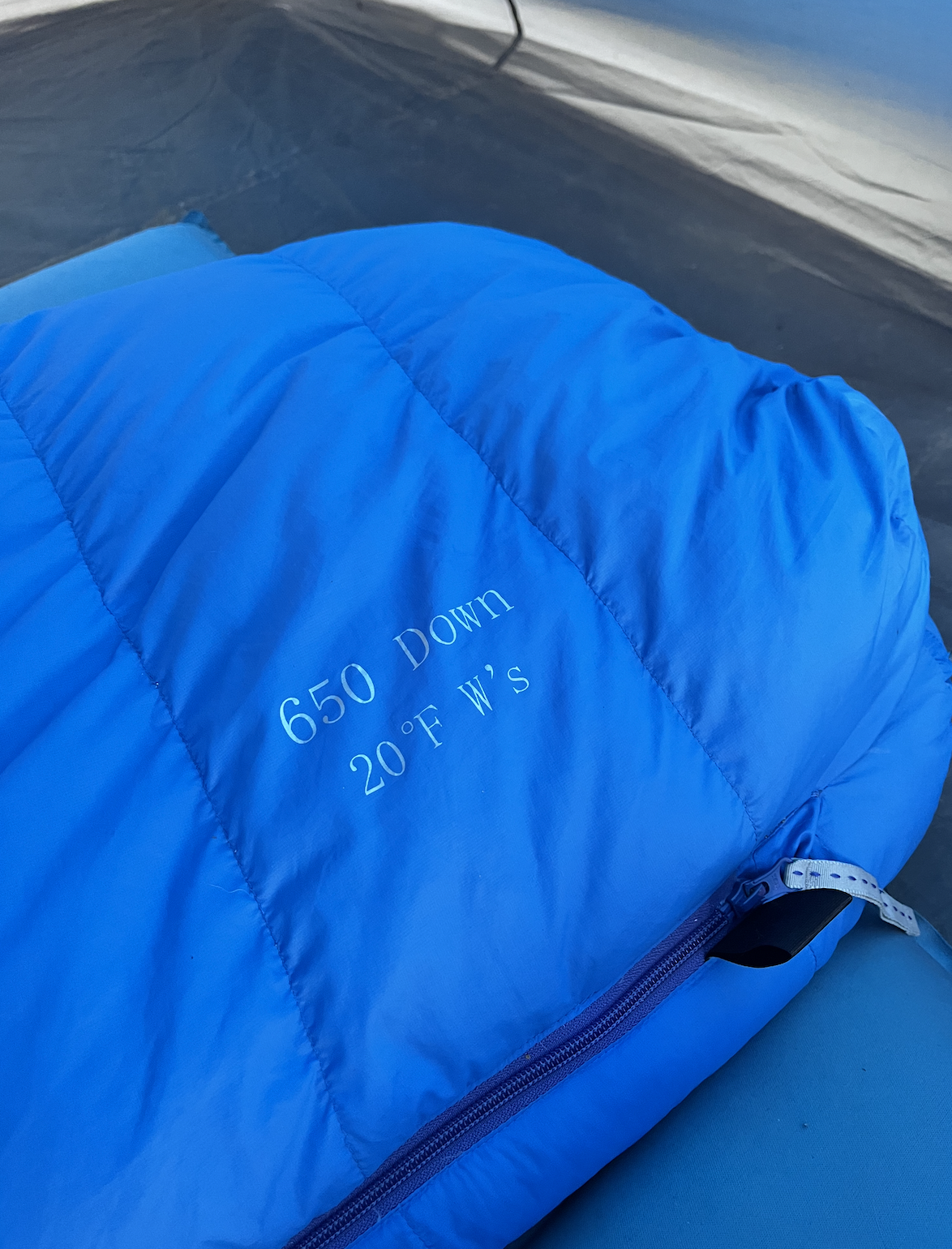
Every sleeping bag is assigned a temperature rating that indicates what temperature range it should be used for. So if you want to camp throughout the year in varying conditions—you may need more than one sleeping bag.
Summer: 30 degree bag or higher
Three-season: 15-30 degree sleeping bag
Winter: 15 degree sleeping bag or lower
Sleeping Bag Insulation
Usually, sleeping bags are insulated with either down fill or synthetic fill.
Synthetic insulation is affordable, continues to insulate when wet, dries fast, and is non-allergenic.
Down insulation is lightweight, compresses for easy packing, performs well in dry conditions, and tends to be durable. Bonus points if the down fill meets RDS (responsible down standard) criteria.
Sleeping Bag Recommendations
I sleep inside my sleeping bag during the shoulder seasons and can use it as a blanket during the Summer months.
Rectangular: L.L.Bean Mountain Classic Down Camp Sleeping Bag, 30°
Synthetic: Therm-a-Rest Saros 32-degree Synthetic Mummy Sleeping Bag
Choosing a Pillow
I have tried numerous inflatable camping pillows and have not enjoyed a single one. Therefore, my advice is to bring a really comfortable pillow you have at home (or a guest pillow) and just swap out the pillowcase. You can thank me later.
Tips for Getting a Good Night’s Sleep While Camping
Have a comfortable, warm sleep setup (hopefully you already do or you will after reading this article!)
Wear dry, breathable pajamas (and only wear them in the tent so you don’t risk getting them dirty or wet)
Bring earplugs (if noise keeps you up at night)
Never go to bed hungry (a full belly = a good night’s sleep)
Stay hydrated (dehydration can cause headaches, which may make it difficult to fall asleep)
Keep extra layers next to your bed (a jacket, hat, mittens, etc.) in case you get cold
Leave no Trace
When it comes to enjoying time outdoors, remember the golden rule: Leave No Trace. It’s as simple as picking up after yourself, staying on the trails, and leaving nature just as beautiful as you found it. By practicing Leave No Trace, you help preserve the magic of Maine for future adventurers to enjoy, so everyone can keep enjoying the same beautiful, wild Maine we love.
Interested in more insider Maine camping tips and recommendations? You can find them all here.
If you love spending time outdoors in Maine, be sure to scroll down to the bottom of the page and subscribe to my e-mail list! By doing so, you’ll be the first to receive all of my latest and greatest outdoorsy Maine content straight to your inbox! And I solemnly swear that I won’t sell your e-mail to spammers or scammers living in their parent’s basement.
With Love,
MyMaine